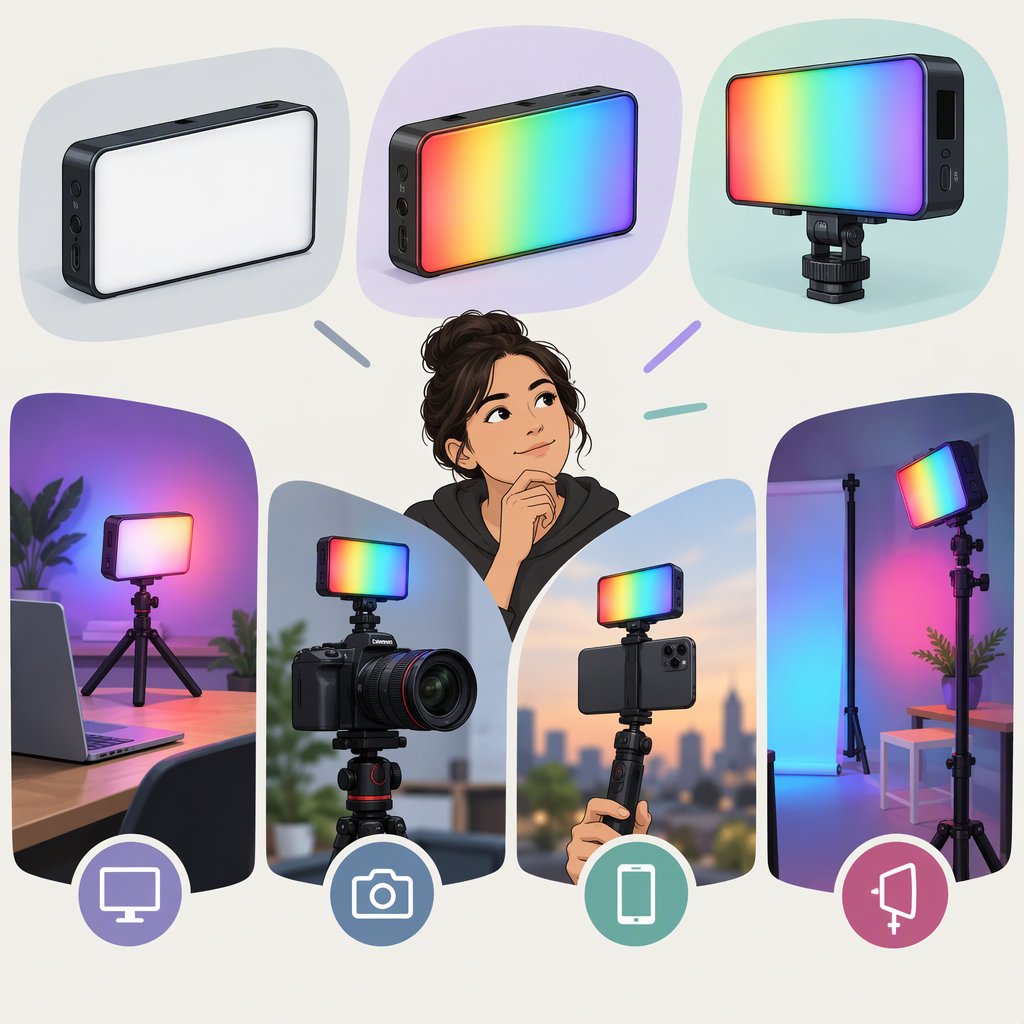
Ulanzi Vl120 RGB Video Light: What to Verify Before Choosing
First, check whether the listing is for the VL120 RGB or the bi-color VL120. Ulanzi’s official catalog presents them as separate products: the VL120 RGB, item 2495, and the Ulanzi VIJIM VL120 Bi-Color, item 2029. They have different color features, so a listing that says only “VL120” is not enough to confirm which one you are considering. (ulanzi.com)
The RGB model is worth considering if you want color effects from a small on-camera light and your intended use does not depend on a documented brightness level or broad coverage. The bi-color model is the more directly specified choice if you mainly need adjustable white light: Ulanzi lists its color-temperature range as 3200–6500K. Neither model’s published headline features, by themselves, establish how much usable light it will deliver in your particular scene.
Confirm Which Vl120 Listing You Mean
Ulanzi’s own pages distinguish the products by their full names and item numbers:
- Ulanzi VL120 RGB LED Video Light — 2495: the RGB version, described by Ulanzi as having HSI control, 20 effects, and a 3100mAh battery. (ulanzi.com)
- Ulanzi VIJIM VL120 Bi-Color LED Video Light — 2029: a separate bi-color product page, listing 3200–6500K, a 3100mAh battery, and CRI 95+ as a manufacturer claim. (ulanzi.com)
This confirms that Ulanzi uses both “Ulanzi” and “VIJIM” in its official product naming, but it does not make the RGB and bi-color lights the same model. When buying or comparing a listing, match its full model name or item number, the controls shown in product photos, and the included accessories. Retailer listings can help identify configuration details, but treat them as retailer-reported unless the manufacturer confirms them.
Match the Documented Color Features to Your Filming Needs
The VL120 RGB is the one to investigate if you want hue and saturation adjustments or built-in effects. Ulanzi describes it as an RGB light with HSI control and 20 effects. B&H, a retailer, lists 2500–9000K white-light adjustment, 0–360° color selection, 0–100% dimming, and 20 effects for its VL120 RGB listing. These are feature descriptions, not independent measurements of brightness or color accuracy. (ulanzi.com)
The bi-color VL120 is specified differently: Ulanzi lists adjustable white color temperature from 3200K to 6500K and claims CRI 95+. Its page also mentions a silicone cover and Type-C charging. These published details may help if your priority is adjusting the apparent warmth or coolness of white light rather than selecting RGB hues. The CRI figure is a manufacturer claim, not an independent test result. (ulanzi.com)
Neither source provides an independently measured output figure or a test distance for the RGB model. That leaves an important practical question unanswered: whether it is bright enough for your subject, framing, and ambient light. A small light used close to a subject may serve as fill or an accent in some setups, but that is a general lighting consideration—not a verified performance result for this light. If you need it to illuminate a wider area, overpower bright ambient light, or serve as your main light from farther away, seek a reliable output measurement for the exact version and setup before relying on it.
Check Mounting, Power, and Runtime Against Your Setup
For the RGB model, B&H lists a built-in battery charged through USB-C, an OLED display, one 1/4-inch-20 mounting thread, and an included cold-shoe adapter. It also describes a removable silicone diffuser. Confirm the exact accessories in the specific package you are considering; a standard thread or shoe adapter does not, by itself, establish compatibility with every camera cage, phone rig, or stand. (bhphotovideo.com)
Runtime deserves particular caution. B&H lists the RGB light’s battery as lasting more than 1.5 hours at maximum brightness and up to 3 hours at minimum brightness. That is a retailer-reported figure, not a measured result in a stated independent test. Ulanzi’s RGB product page confirms a 3100mAh battery but does not give a runtime figure in the captured product information. Treat runtime as an estimate, and plan around the brightness and color mode you will actually use rather than assuming the longest figure applies to a typical shoot. (ulanzi.com)
Before choosing, check:
- Version: Is the listing for RGB item 2495 or the bi-color VL120 item 2029?
- Mount: Does the package include the adapter you need, and will it fit your rig?
- Power: Is USB-C charging convenient for your shoot, and can you recharge between takes?
- Output evidence: Is there a trustworthy brightness measurement at a stated distance and setting for your intended use?
- Runtime: Does the seller give a figure for the exact version and brightness setting? If not, do not plan a long shoot around an assumed runtime.
Make a Neutral Fit Decision
- Consider the RGB version if you specifically want selectable colors or effects, a compact light for close-range fill or accents, and can confirm the mount and power arrangement for your rig. The published RGB features support that kind of feature-based comparison; they do not prove adequate output for every scene.
- Consider the bi-color version if your main requirement is adjustable white light across the manufacturer-listed 3200–6500K range and you do not need the RGB model’s listed effects. Remember that Ulanzi’s CRI 95+ figure is a manufacturer claim. (ulanzi.com)
- Verify more—or consider a different type of light if you need dependable output at distance, broad coverage, a verified runtime for a long session, or independent color and brightness measurements. The evidence cited here does not settle those requirements for either VL120 version.
The practical choice is therefore not simply “VL120 or no VL120”: first identify the version, then compare its documented features with your actual color, mounting, and power needs. If brightness or runtime is a deal-breaker, the available product information here is not enough to make a confident model-specific performance judgment.