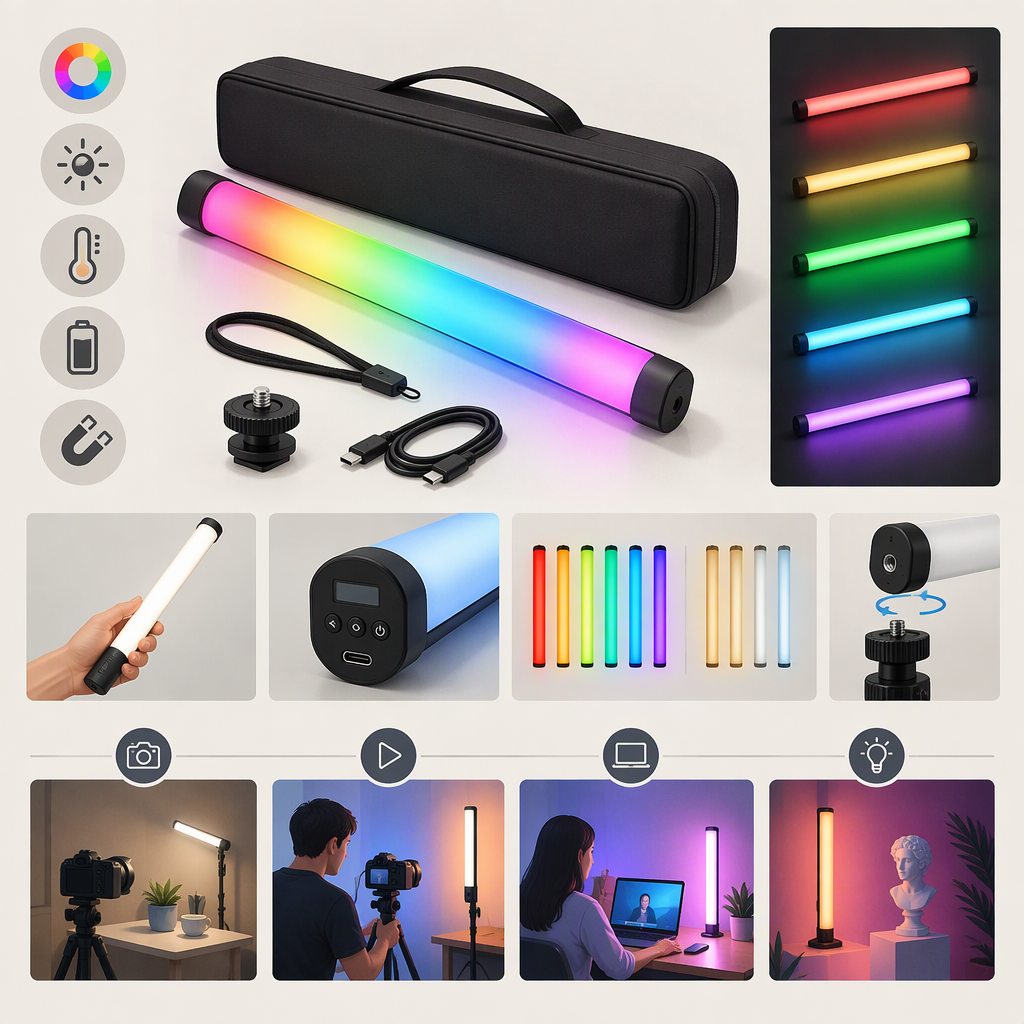
Ulanzi Vl110 RGB Tube Light: A Neutral Selection Guide
First, Confirm Which Light This Page Is About
The assignment names “Ulanzi/Vijim VL110,” but its supplied page address contains “Godox VL110.” These names should not be treated as interchangeable. Ulanzi’s official product page identifies a product as the Ulanzi VL110 Magnetic RGB LED Tube Light. That supports identifying the search topic as Ulanzi VL110; it does not establish that “Vijim” is another name for it. The supplied Godox page address remains a conflicting editorial detail and should be corrected or confirmed before publication. (ulanzi.com)
This guide offers general selection advice, not a product review or a verdict on the VL110’s performance. It does not establish whether the light is suitable for a particular setup.
Start with the Filming Need
Before comparing lights, write down the job the light needs to do:
- Subject and shot: What are you lighting—an object, a person, or part of a background? Is the light meant to be the main light, a fill, or an accent?
- Distance and space: Where could the light sit relative to the subject, and how much room is available? A light that works close to a small subject may not meet the needs of a wider setup.
- Color needs: Do you need natural-looking illumination, colored accents, or both? If accurate subject color matters, look for relevant color-rendering information in documentation rather than relying on a general “RGB” label.
- Placement: Decide whether the light must attach to a surface, fit a support you already own, or be positioned independently. Confirm the mounting method and any required accessories for the exact item.
- Power and session length: Estimate how long a typical shoot lasts and whether power will be available nearby. Compare those needs with documented power and runtime information under conditions relevant to your use.
- Portability: Consider how often you will carry and reposition the light, and whether size, weight, and charging arrangements suit your kit.
These are general selection criteria, not claims about the Ulanzi VL110.
Compare the Documentation with Your Checklist
Use the manufacturer’s documentation to confirm product identity and any specifications you need for the decision. Then check the exact seller listing for what that particular offer includes. A listing’s bundle or terms may differ from another listing, so do not assume an accessory, warranty, or other purchase detail is included unless it is stated for the item you are considering.
For any specification that affects your setup, check its unit and conditions. For example, output figures are only useful for comparison when the measurement distance and relevant settings are clear; runtime figures matter only in light of the brightness or operating conditions reported. If an important detail is missing or unclear, treat it as unknown rather than filling the gap with an assumption.
A Quick Decision Method
- Write down your must-haves. Separate essential needs—such as fitting your available space—from preferences, such as a particular color effect.
- Find the exact model name in the documentation and listing. Do not rely on a similar name, a page slug, or a retailer’s shorthand alone.
- Match each must-have to a documented detail. Note the source and any conditions attached to the figure.
- Mark gaps. If a needed detail is absent, seek clarification from the relevant manufacturer or seller; do not count it as confirmed.
- Choose conditionally. A light is worth considering only if its documented details and the exact listing meet your stated needs. If a critical requirement cannot be confirmed, compare another option whose documentation answers it.
Example: If you plan to film a small object on a desk, first check whether the documented output and placement options suit the distance and space you have. If you plan to film a person across a larger room, reassess output at that distance rather than assuming a compact light will provide enough illumination. These examples illustrate a general method; they are not tests or suitability findings for the VL110.
Before Deciding
- Is the item clearly identified as the model you intend to compare?
- Do the documented details answer your needs for distance, color, placement, power, and portability?
- Are the measurement conditions relevant to your setup?
- Does the exact listing state what is included and any purchase terms that matter to you?
- Are any important answers still unknown?
A neutral choice comes from matching verified details to your own setup—not from a model name or a feature label alone.