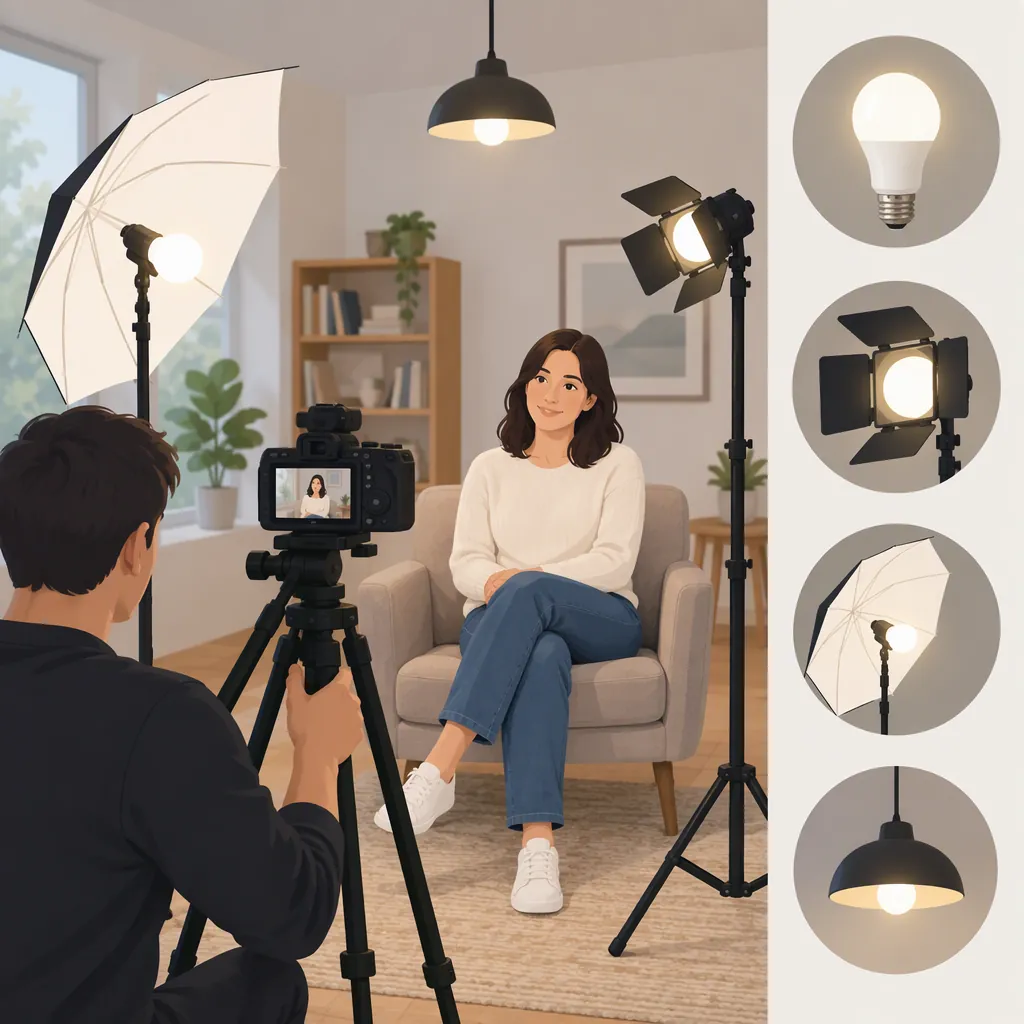
Video Bulb Lighting for Indoor Filming
A light bulb can serve as a video light for close-range indoor filming, but it should not be assumed to replace a dedicated video fixture. A 2015 DIYPhotography article describes hardware-store LED bulbs used for interviews, instructional videos, and product demonstrations, while emphasizing limited output. Treat that example as a starting point for testing, not a guarantee for any current bulb. [c1]
What a Video Bulb Means in a Filming Kit
Here, video bulb means a light bulb used to illuminate a video scene, rather than a particular brand or model. Keep the bulb, its lamp holder, and any light modifier separate when planning the kit.
DIYPhotography's example concerns modest indoor lighting needs, not large sets. The author reports using LED bulbs at close range and needing relatively high ISO settings and a wide aperture because of their limited output. Those observations describe that setup; they are not universal exposure settings. [c1]
Dedicated video lights are a separate equipment category. The supplied Lighting & Studio catalog lists LED video lights, monolights, tube lights, and other lighting equipment. That listing establishes available fixture types, not a performance comparison with household bulbs. [c2]
Compare More than Brightness
The DIYPhotography article considers light output, color temperature, CRI, and beam spread when discussing bulb options. It also distinguishes broad-spread bulbs from narrower-beam examples. [c1]
Use those characteristics as a comparison checklist:
- Output: Record the stated lumen value, but leave the suitability decision to a camera test in your intended setup.
- Color temperature: Record the stated Kelvin value so you can compare bulbs consistently.
- CRI: Look for a stated rating rather than assuming that a color-temperature label also establishes color quality.
- Beam spread: Note whether you want room illumination or a more directed light.
- Dimming: Verify the specific bulb and dimmer combination rather than extending the article's dimming descriptions to other bulbs.
The source is from 2015. Its bulb examples and specifications should not be treated as a current buying list. [c1]
Plan Placement and Mounting
The source describes ceiling bounce, softbox use, and a shoot-through umbrella in different bulb setups. It reports losing light output through a softbox and warns that the clamp on its example lamp holder was inadequate for the large, heavy bulbs. [c1]
Do not copy the article's improvised taped mounting as a general installation method. Follow the bulb, holder, and modifier manufacturers' compatibility and safety instructions. Verify the socket type, electrical rating, physical clearance, ventilation requirements, and secure support before powering the assembly. Do not modify wiring or bypass fixture protections.
For a filming plan, specify one arrangement at a time: direct light, bounce, or a compatible modifier. Evaluate that complete arrangement rather than judging the bulb in isolation.
Run a Bulb-Specific Camera Test
Before relying on a bulb for a shoot, make a short test using the intended camera, subject position, room lighting, and safely supported fixture. This is a suggested evaluation process, not a claim that a particular bulb will pass.
- Record the bulb and fixture labels, placement, and any modifier.
- Set the camera to the frame rate and exposure settings planned for the shoot.
- Record the subject under the bulb at each intended brightness setting.
- Review the recording for visible brightness fluctuations, bands, unwanted color casts, distracting shadows, and insufficient illumination.
- Change one variable at a time and repeat the recording.
Keep the result specific to the tested combination. If it does not meet the scene's needs, reconsider the lighting arrangement rather than assuming that adding more bulbs will resolve every issue.
Video Bulb Test Record
Bulb identification:
Fixture identification and compatibility check:
Placement and modifier:
Other room lighting:
Camera and lens:
Frame rate and exposure settings:
Bulb brightness setting:
Observed brightness fluctuations or bands:
Observed color and shadows:
Illumination acceptable for this scene: Yes / No
Next single-variable adjustment:
FAQ
Can a Household Led Bulb Be Used for Video?
The DIYPhotography article documents that approach for close-range indoor work, with limited output. It does not establish that every household LED bulb is suitable. Test the specific bulb and safely compatible fixture in your intended scene. [c1]
What Camera Settings Should I Use with a Video Bulb?
There is no universal setting established by these sources. The article reports high ISO and wide-aperture use for its examples, but your settings should be evaluated with your own bulb, placement, modifier, and scene. [c1]
Can I Put a Bulb Inside a Softbox?
The article describes doing so and reports reduced light output. That is not blanket compatibility or safety approval. Use only a bulb, holder, and modifier combination permitted by their manufacturers, with secure support and required clearance. [c1]