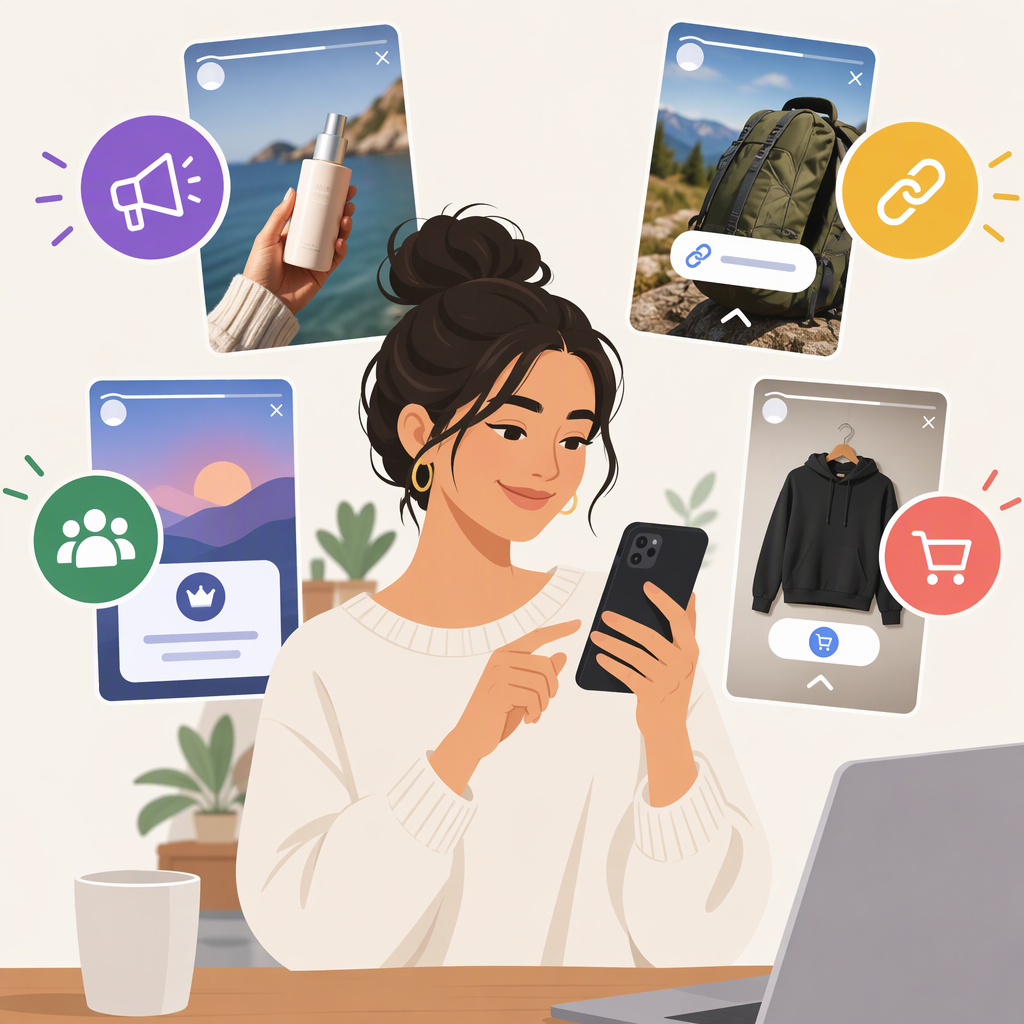
Instagram Stories Monetization: 4 Ways Creators Can Earn
Instagram Stories can support monetization, but most Story-based earnings come from a brand agreement, an affiliate sale, or a sale of your own offer—not an automatic payment for each Story view. One Instagram-native option tied directly to Stories is offering exclusive Stories to paying subscribers, if that feature is available to your account. Meta describes Instagram Subscriptions as a way to earn recurring income by giving subscribers access to exclusive content, including Stories. (about.fb.com)
The Main Ways to Monetize Instagram Stories
| Route | Who pays you | What the Story does | Main dependency |
|---|---|---|---|
| Paid brand partnership | A brand pays under an agreement | Presents or endorses the brand’s product or service | Finding a partner, agreeing on terms, and following applicable branded-content and disclosure rules |
| Affiliate promotion | A retailer or affiliate program pays commission on qualifying purchases | Recommends a product and directs interested viewers to the purchase route | An affiliate agreement, a trackable link or code, and eligible purchases |
| Your own product or service | The customer pays you or your business | Explains your offer and points viewers to the next step, such as learning more or buying | An offer, a way to complete the sale, and customer support or delivery |
| Instagram Subscriptions | Subscribers pay through Instagram | Promotes or delivers exclusive subscriber content, including Stories | Feature and account eligibility; availability may vary |
The first three are business arrangements Stories can help support; they are not, by themselves, Instagram paying you for Story views. Meta’s description of Subscriptions identifies exclusive Stories as subscriber content, not a general per-view Story payout. Check Instagram’s current in-app professional tools for features and eligibility that apply to your account. (about.fb.com)
How Each Route Works in a Story
1. Paid Brand Partnerships
A brand pays you to create agreed content featuring or discussing its product or service. The Story is the sponsored content; payment terms—such as the fee, number of Story frames, timing, usage rights, and any exclusivity—come from your agreement with the brand. Instagram’s Creator Marketplace is one platform tool Meta describes for connecting brands and creators, but access to a marketplace or a deal is not guaranteed. (about.fb.com)
A simple sequence might introduce the product, explain your honest experience or the agreed message, and tell viewers what to do next. Use the platform’s branded-content tools when they apply, but don’t treat a platform label as a substitute for any disclosure required by law.
2. Affiliate Promotion
With affiliate marketing, you recommend a product and may earn a commission if a viewer makes a qualifying purchase through your tracking link or code. The brand or affiliate program—not Instagram simply because the recommendation appeared in a Story—pays the commission. Terms differ by program, so check what counts as a qualifying purchase, how returns affect commissions, and when payment is made.
For example, a creator could show how a relevant product fits into a routine, disclose the affiliate relationship, then direct viewers to the available purchase route. This is a hypothetical content sequence, not a promise of sales. Don’t assume a particular Story sticker, product-tagging feature, or link option is available to every account; use a route currently available to you and make the next step clear.
3. Your Own Products or Services
If you sell a product, class, consulting service, membership, or other offer, Stories can explain who it is for and direct interested viewers to a purchase or inquiry step. The customer pays you or your business; Instagram is the promotional channel, not necessarily the seller or payment processor. You control the offer and price, while taking responsibility for fulfillment, customer questions, and any sales terms that apply.
A useful sequence is: describe a specific audience problem, explain how your offer addresses it without promising unsupported results, then give viewers a clear next step. That step could be an available link, a message, or another route you actually support.
4. Instagram Subscriptions and Exclusive Stories
Instagram Subscriptions let eligible creators offer paid benefits to subscribers. Meta has described exclusive Stories and other subscriber-only content as part of the feature; its announcement also described a subscription sticker in Stories that could help followers subscribe. Availability and feature details can change, so confirm what your account currently offers before planning around a particular sticker or workflow. (about.fb.com)
This is different from selling a one-off sponsored Story: subscribers pay for an ongoing relationship or set of exclusive benefits, and you need to decide whether you can consistently provide the promised content. A public Story may help explain the subscription, while subscriber-only Stories deliver part of the benefit. Do not assume every creator can enable subscriptions or that every account has identical terms.
Which Route Should You Choose?
Start with the kind of income you want and what you can reliably provide:
- Choose brand partnerships if your goal is campaign income and you’re prepared to negotiate terms, create sponsored content, and disclose the relationship.
- Consider affiliate promotion if you already recommend relevant products and are comfortable with income depending on tracked qualifying purchases rather than a guaranteed fee.
- Sell your own offer if you have a product or service ready to deliver and want to control the offer and customer journey. That control also means handling sales and fulfillment.
- Consider Subscriptions if you can offer continuing subscriber value and the feature is available to your account. This creates an ongoing content commitment, not simply a one-time promotion.
These are practical differences in how the arrangements work, not claims about which route earns more or converts better. A creator with no product to sell, for instance, may start by exploring a relevant brand or affiliate arrangement; a creator with a ready-to-deliver service may prefer to send interested viewers to an inquiry step. The right fit depends on the audience, offer, workload, and terms—not on an assumed earnings ranking.
Disclosure, Eligibility, and Policy Checks
Before publishing a monetized Story, check the items that apply to your route:
- Confirm feature access. If you plan to use Instagram Subscriptions or another platform feature, check your account’s current professional tools and eligibility information. Don’t promise access based on another creator’s account or an old announcement.
- Review the agreement or affiliate terms. Confirm what you must publish, what the payment or commission depends on, and any restrictions on how you may describe the offer.
- Disclose material connections clearly. In the United States, FTC guidance says a relationship may need disclosure when you receive money, free or discounted products, or another benefit in connection with an endorsement. For a Story endorsement, the FTC advises placing the disclosure over the image and leaving viewers enough time to notice and read it. A disclosure should be easy to see and understand, not buried among hashtags or links. (ftc.gov)
- Use platform tools where relevant, but don’t rely on them alone. Meta describes branded content and paid-partnership labeling for creator collaborations. FTC staff guidance cautions that a platform’s disclosure tool may not, by itself, be sufficient in every context. (about.fb.com)
- Consider the relevant jurisdictions. This article’s US disclosure notes summarize FTC guidance, not a rule for every country or every transaction. Other local requirements may also apply, including when a post made abroad could reasonably affect US consumers. For a specific legal question, consult the rules or qualified advice applicable to your situation. (ftc.gov)
Measure the Action You Intended
Choose a simple measure that matches the route: inquiries for a service, qualifying purchases for an affiliate offer, completed orders for your own product, or subscriber sign-ups for a subscription. Compare those outcomes with your own previous Stories and note what offer and call to action you used. Use only metrics and tracking methods actually available to your account or sales setup; a view count alone does not tell you whether a monetization route produced a sale or subscription.
Bottom line: Instagram Stories can help creators earn through paid partnerships, affiliate commissions, their own sales, and—where available—subscriber-only content. Choose based on who pays, what you can offer, the work involved, and which features and rules actually apply to your account and audience.