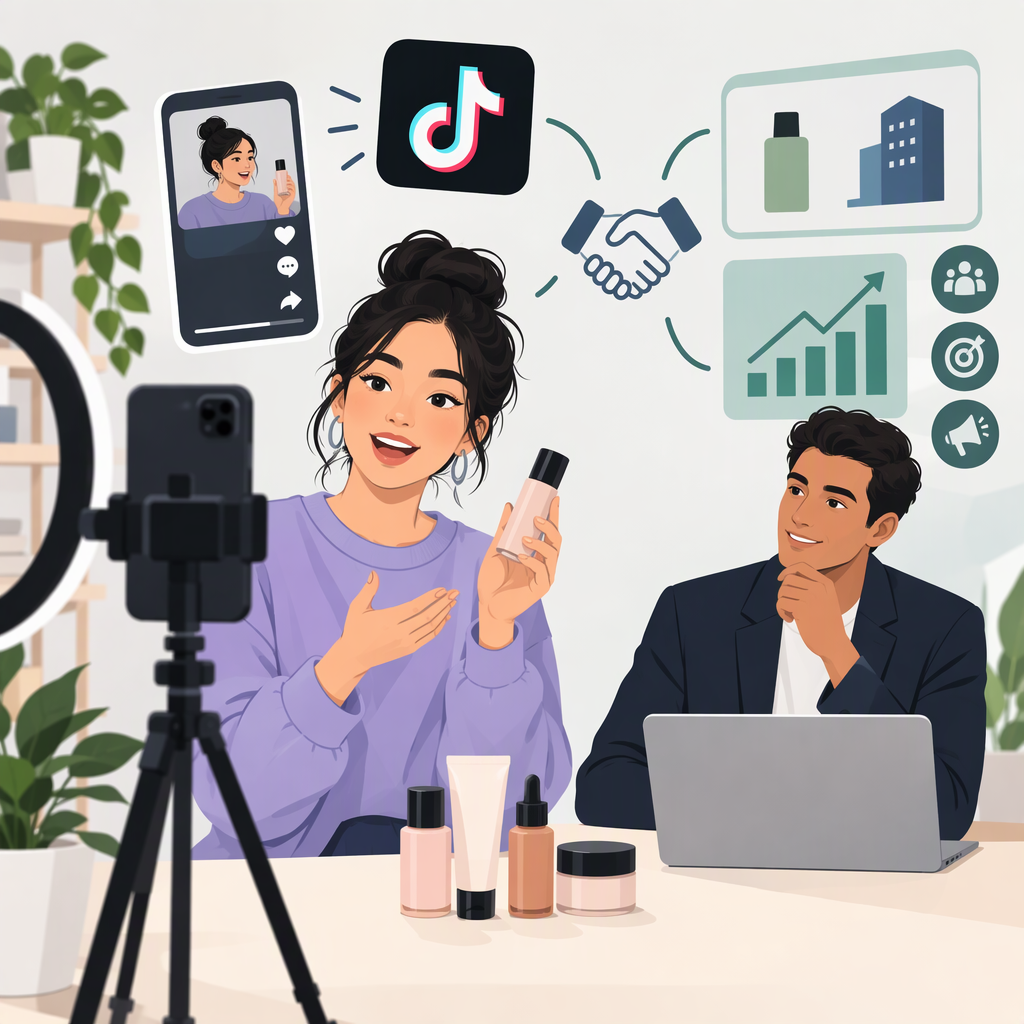
TikTok Creator Marketing: A Practical Guide for Creators and Brands
TikTok creator marketing can mean a creator promoting their own work or business, or a creator partnering with another business to make promotional content. The right approach depends on whose goal you’re pursuing: creators can use the first path to explain and promote their own offering; businesses and creators can use the second to plan a paid or otherwise incentivized collaboration.
This guide covers both paths. It does not assume either one is the dominant meaning of the phrase, or that using a particular marketplace is required.
What Does TikTok Creator Marketing Mean?
The term describes using creator-made TikTok content to promote something. It may be:
- Creator self-promotion: A creator posts about their own business, product, service, or work.
- A creator partnership: A business works with a creator to make content about the business or its offering.
A partnership might involve payment or another incentive. If you’re a creator, you may be assessing whether to promote your own offering or accept a collaboration. If you represent a business, you may be deciding whether a creator partnership fits your communication goal. In either case, start with the goal—not an assumption that the platform will guarantee reach or sales.
Decide Whether It Fits Your Goal
Use this short decision process before committing time or budget:
- Name the outcome you want. Is the immediate aim to explain something, invite people to consider it, or encourage a particular action? Make the goal specific enough that you can tell what you’ll review later.
- Identify the audience you need to reach. Describe the people you want to communicate with and the question, interest, or need the content should address. Don’t rely on broad claims about who TikTok users are unless you have evidence relevant to your audience and region.
- Check for a natural content fit. Ask whether a creator’s perspective, style, and subject matter can make the message clear and credible without scripting an experience they did not have. If the idea only works by making a creator sound unlike themselves, rethink the brief.
- Set limits on resources and risk. Account for creator fees or other compensation, production and review time, any paid distribution, and the work needed to assess results. Decide in advance what you can afford to learn from a small test.
- Choose a next step. Proceed when the goal, audience, content idea, responsibilities, and review method are clear. Test on a limited scale if the idea is plausible but uncertain and you can define a useful learning goal. Reconsider if you cannot describe the intended outcome, support the claims in the content, or agree on permissions and disclosure.
A test is a way to gather information, not a promise of performance. If the first attempt does not meet your stated goal, review the creative, audience fit, execution, and measurement before deciding whether to change, repeat, or stop.
Plan a Creator Promotion or Partnership
For self-promotion, use the checklist to make the post clear and transparent. For a partnership, the creator and business can use it to align before production. These are planning points, not a substitute for applicable platform rules or legal advice.
1. Write a Brief Around the Goal
State the purpose, intended audience, key facts, desired action (if any), and any claims that must be accurate. Give the creator enough context to make the content their own. Avoid requiring a personal testimonial or result that is not true to the creator’s experience.
2. Agree on the Work and Payment
For a partnership, put the practical details in writing: what content will be made, how many pieces, expected timing, where content will appear, review steps, and what compensation or other incentive is involved. Clarify what happens if plans change. Specific terms should reflect the agreement between the parties; they are not universal platform requirements.
3. Set Creative and Approval Boundaries
Agree on which factual details need checking and who will review them, while allowing room for the creator’s authentic voice. Decide how edits, corrections, or delays will be handled. Do not ask a creator to present an opinion or product experience they do not hold.
4. Define Content-Use Permissions
Discuss separately whether the business may repost the content, use it in advertising, edit it, or use it on other channels—and for how long and in which places. A post appearing on a creator’s account does not, by itself, explain what rights the other party has. Confirm any permissions in the agreement and check relevant platform terms before using content in a different way.
Disclosures: Platform Setting and U.S. Guidance
TikTok’s Help Center says creators must turn on its content disclosure setting when posting content that promotes their own business or promotes a third-party brand in exchange for payment or another incentive. TikTok says the setting labels self-promotion as “Promotional content” and a post on behalf of another business as “Paid partnership.” It also says a post may be removed or restricted if the proper disclosure is not displayed. TikTok states that turning on the setting does not affect feed distribution. (support.tiktok.com)
That is TikTok platform guidance, not a replacement for legal disclosure obligations. For U.S. audiences, FTC guidance says endorsements should be honest and not misleading, and that certain connections between an endorser and a business—such as payment or something of value—should be disclosed clearly and conspicuously when consumers would not necessarily expect the connection and it could affect how they evaluate the endorsement. The FTC also cautions that whether a disclosure is needed or sufficient depends on the context. (ftc.gov)
A practical approach is to use TikTok’s disclosure setting when required by the platform and make the relationship clear to viewers in the content where appropriate. Don’t assume the platform label alone settles every legal question. FTC guidance is U.S.-focused; requirements may differ elsewhere, and particular circumstances matter.
Measure What Matches the Goal
Decide what evidence would be useful before publishing. Match the measure to the outcome you chose, and review the result against that goal—not just the most visible number.
| Goal | What to review | What it can help you decide |
|---|---|---|
| Explain an idea | Whether the content communicates the intended information; relevant audience responses or questions | Whether to clarify the explanation or address a recurring question |
| Encourage consideration | A defined action that signals interest, if one is part of the plan | Whether the message or next step needs adjustment |
| Encourage an action | The action you asked people to take, using an agreed measurement method | Whether to revise the offer, call to action, or campaign approach |
| Learn whether a creator fit is promising | Content quality against the brief, audience relevance, process, and the agreed outcome measure | Whether to test a different concept, continue, or stop |
Illustrative example—not a reported result: A creator and a small business agree that the post’s goal is to explain how a service works. They review whether viewers understand the steps and what questions remain. If many responses show confusion about the same step, they might revise the explanation. That would be a learning signal, not proof that the post increased sales.
Views or engagement can describe activity, but by themselves they do not establish that a business outcome happened because of a post. Keep the question, time period, and measurement method consistent when comparing attempts. Use only metric names and data actually available to you; this guide does not assume a particular analytics feature, benchmark, or attribution method.
What About TikTok Creator Marketplace?
TikTok’s current creator-marketing site uses the name TikTok One and describes creator-related tools and services for brands, creators, and partners. That may be relevant to some partnership plans, but it is not necessary to understand creator marketing generally, and this guide does not review the platform or assume a particular feature or access level is available to every reader. Check TikTok’s current information for details that matter to your situation. (creatormarketplace.tiktok.com)
A Concise Pre-Publish Checklist
- Is the content’s goal clear and realistic?
- Does the creator’s content fit the audience and subject?
- Are claims accurate and consistent with the creator’s genuine experience?
- Have the parties agreed on deliverables, compensation where applicable, review, and content-use permissions?
- Has the TikTok disclosure setting been selected as required for the post?
- For a U.S.-facing endorsement, is any relevant relationship made clear to viewers in a way appropriate to the content?
- Is there a defined way to review the outcome—and a reasonable next step if it misses the goal?
The useful starting point for TikTok creator marketing is a clear purpose, an appropriate creator-led idea, transparent handling of promotional relationships, and a measurement plan that does not claim more than the evidence shows.