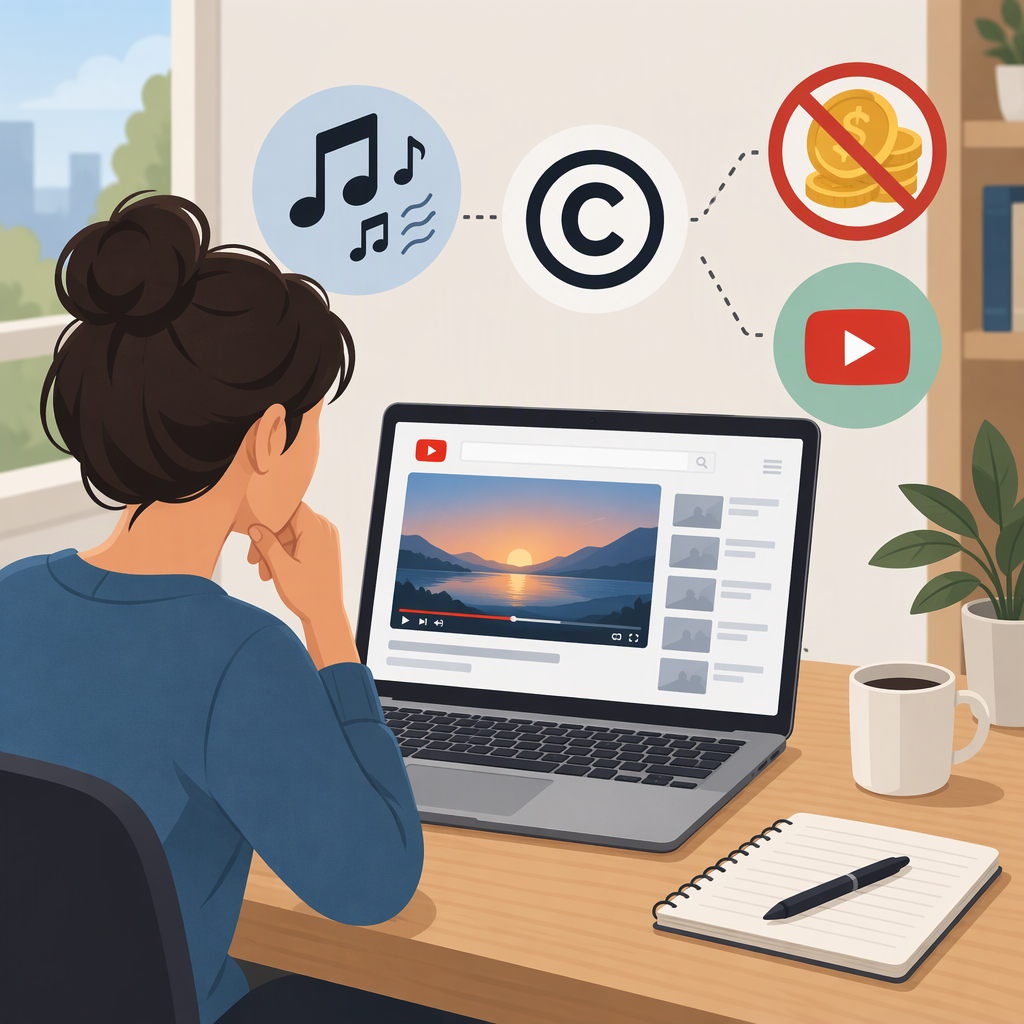
Can You Use Copyrighted Music on YouTube Without Monetizing?
Not monetizing a video does not, by itself, give you permission to use copyrighted music. Permission and monetization are separate questions: whether you may use a song depends on having permission or another valid legal basis, while YouTube’s response to identified music depends on the rights holder’s policy and the situation. YouTube says creators generally need permission to include someone else’s copyrighted material, and the U.S. Copyright Office describes permission or a license as one way to make an intended use lawful. (support.google.com)
What to Check Before You Upload
If you plan to use a song you did not create, check the actual permission or license for your specific video. A practical checklist:
- Identify the exact material: Is it a particular recording, the underlying song, or both? A musical composition and a sound recording are separate works, so permission to use one does not necessarily establish permission to use the other. (copyright.gov)
- Check who granted permission: Confirm that the person or organization giving permission can authorize the material and the use you have in mind.
- Read the scope and conditions: Look for whether the permission covers a YouTube video and your intended use, and note any stated limits or requirements, such as attribution, duration, territory, edits, or use on other platforms. These are items to check in the actual terms—not a universal checklist of legal requirements.
- Keep the evidence: Save the license, written permission, receipt, or other record, along with the song and recording details it applies to.
- If the scope is unclear, ask the rights holder or choose music with terms that clearly fit your video. YouTube cannot grant rights to someone else’s music on a creator’s behalf. (support.google.com)
Example: Suppose a creator has permission to use a particular recording in one video, but the permission’s terms are unclear about uploading it to YouTube. The creator should clarify that scope before publishing. Choosing not to turn on monetization would not resolve the uncertainty about permission.
What Can Happen If YouTube Identifies the Music?
A Content ID claim may be generated when an upload matches music in YouTube’s system. Depending on the rights holder’s policy, the video may be monetized, tracked, or blocked. Those actions can vary by country or region; a video may, for example, be available in one place and blocked in another. A monetization policy can mean ads appear even if you do not intend to earn money from the video. (support.google.com)
A claim is a platform action, not a legal ruling that you had permission. Likewise, the absence of a claim does not establish that you had permission. YouTube distinguishes Content ID claims from copyright removal requests: a removal request is a separate legal process and can result in the video being removed and a copyright strike. (support.google.com)
| Situation | What it means for the video | What to keep in mind |
|---|---|---|
| Content ID claim with a monetize policy | Ads may run on the video; the rights holder may sometimes share revenue with the uploader. | You may see ads even if you did not choose to monetize the video. |
| Content ID claim with a track policy | The rights holder tracks viewership. | A claim does not itself show that you had permission. |
| Content ID claim with a block policy | The video may be unavailable in some or all regions. | Policies can vary by region. |
| Copyright removal request | YouTube may remove the video; a valid request can result in a copyright strike. | This is distinct from a Content ID claim. |
The table describes possible outcomes, not a prediction for any particular song or upload. (support.google.com)
If You Receive a Claim
- Open the claim details in YouTube Studio. Check what material is identified, who made the claim, and what policy or restriction applies. YouTube says creators can review claims in Studio. (support.google.com)
- Compare the claim with your permission or legal basis. Check that your documentation covers the identified music and the use in the video.
- Choose a response that fits the facts.
- If you do not have a supportable basis to use the music, YouTube may offer editing options such as trimming the claimed segment, replacing the song, or muting claimed audio. The available options and results can vary. (support.google.com)
- If you believe the claim is mistaken or have a valid basis to use the music, review YouTube’s current dispute instructions and consider disputing only if you can explain that basis. YouTube warns creators to appeal only when confident they have the necessary rights; a rejected appeal can be followed by a copyright removal request. (support.google.com)
- Treat a removal notice differently from a claim. Check the notice and YouTube’s instructions carefully; removal requests and strikes have different consequences from Content ID claims. (support.google.com)
Do not dispute solely because you are not monetizing, gave credit, or used only a short excerpt. YouTube says credit alone does not create permission or automatically make a use fair; the U.S. Copyright Office also says there is no fixed number of musical notes or percentage that is automatically allowed. (support.google.com)
Could a Copyright Exception Apply?
Possibly, but noncommercial intent alone does not establish an exception. In the United States, fair use is assessed case by case under factors that include the purpose and character of the use, the nature of the work, the amount used, and the effect on the work’s market. A noncommercial purpose can matter, but it is only part of the analysis. YouTube also notes that copyright exceptions differ across countries and regions. (copyright.gov)
If your video or audience involves more than one country, or if a fair-use argument is important to your decision, the applicable rules may require jurisdiction-specific advice. This article gives general information, not a determination about a particular song or video.
Bottom Line
You can’t assume copyrighted music is permitted just because you won’t monetize the video. Before uploading, verify that your permission or other legal basis covers the actual music and planned use. If YouTube identifies the music, review the specific claim and choose an appropriate response; neither a claim nor the absence of one settles whether your use was legally authorized.