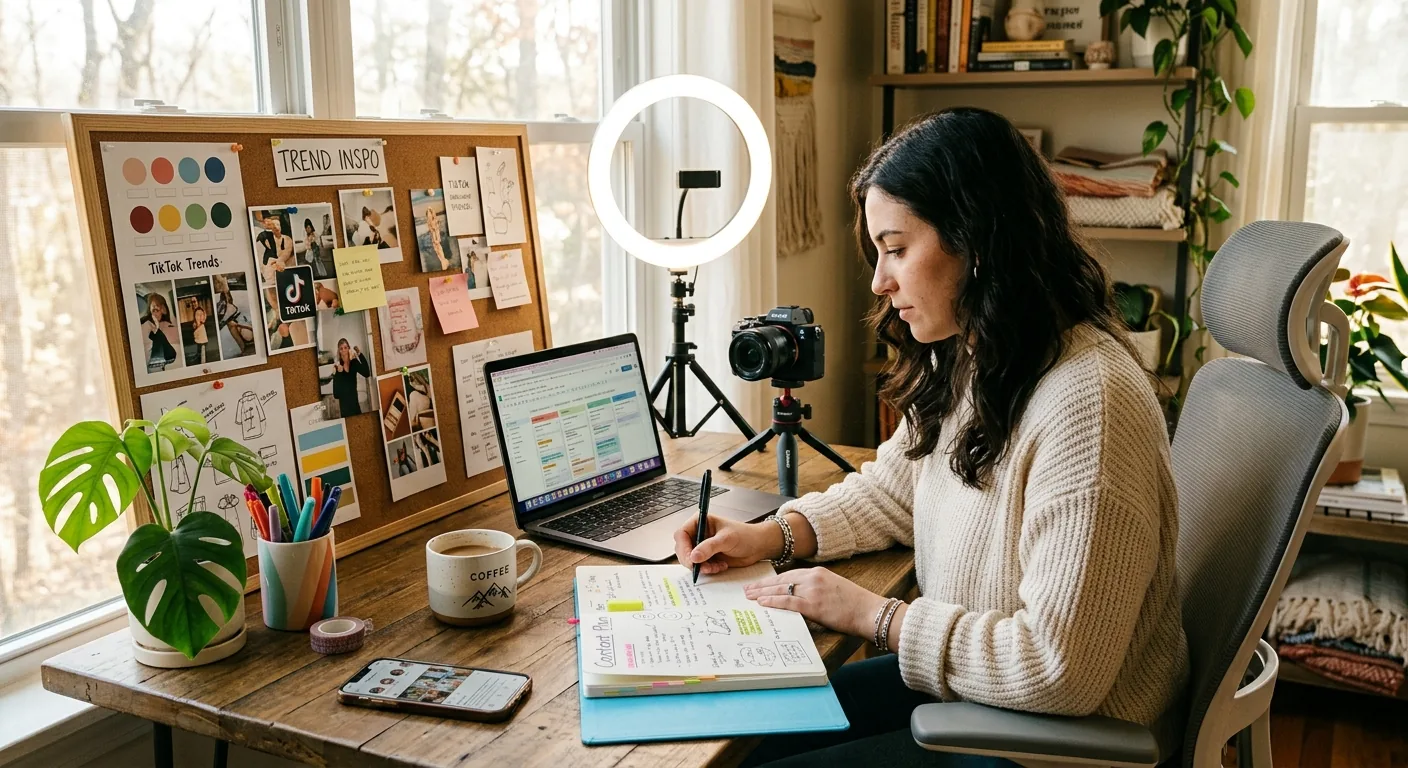
Use Content Trends
Yes — content creators can use content trends while pursuing brand collaborations, but the smart move is to treat each trend as a decision, not a reflex. The most useful way to approach the “content trends creator guide” question is to keep a short decision log: note what you believe is true, what proof you still need, and what your next move should be before you post, pitch, or reference the trend in a sponsor conversation. Important outbound messages and commercial commitments should still be reviewed and approved by the creator.
A trend can help your positioning when it fits your audience, your on-camera style, your content standards, your timing, and the kind of brand categories you want to work with. A trend can also waste effort if it pulls you off-niche, confuses your audience, or creates a clip that looks hard for a sponsor to use safely. That is why the decision log matters: it gives you a fast way to decide whether to test, hold, adapt, or skip a trend.
Quick Answer: Use a Decision Log Before You Join a Trend
If you want brand collaborations, do not ask only, “Is this trend popular?” Ask, “Should I use this specific trend right now because it strengthens my creator positioning for future sponsor work?” That is a narrower and more useful question.
A simple decision log helps you answer it without overthinking:
Decision log field What to record Trend observed The exact audio, format, meme, hook, or editing pattern you are considering Collaboration goal The brand category or sponsor image you want this post to support Known facts What you already know from your own recent content performance or audience response Assumptions What you think is true but have not verified yet Evidence to collect What you need to check before posting or discussing the trend with a brand Risks Anything that could make the trend a poor fit for your niche or sponsor goals Next move Test, adapt, hold, or skip Decision owner You, or the specific person on your small team approving the move That log does two important things. First, it separates facts from guesses. Second, it keeps human judgment involved when commercial actions are discussed. If a trend later becomes part of a sponsor-facing idea, creators should independently verify contacts and approve every outbound message, commercial term, and commitment.
Clarify the Decision for Content Trends Creator Guide
The real decision is not whether trends matter in general. The decision is whether this trend deserves a place in your content mix because it may help your brand-collaboration positioning.
That means the decision should be framed with a clear sentence such as:
“Should I adapt this current trend for my account this week because it fits my audience and could support future outreach to skincare brands?”
Or:
“Should I skip this trend because it gets views broadly but does not fit the calm, tutorial-based style I want brands to see from me?”
This framing matters because brand collaboration goals usually care about more than reach. Brands often look at whether your content style is repeatable, sponsor-safe, relevant to their category, and consistent enough to imagine in a paid partnership.
When your decision is clear, you avoid two common mistakes:
-
Joining a trend only because it is everywhere. That can lead to content that spikes briefly but does not help your creator identity.
-
Rejecting every trend too early. Some trends can work well when adapted to your niche, tone, or product category.
A clear decision statement should include:
-
the trend itself
-
the niche context
-
the timing window
-
the sponsor goal
-
the threshold for moving forward
For example, a stronger decision statement is:
- “If I can connect this trend to budget beauty swaps in a way that still feels natural on camera, I will test one version this week.”
A weaker one is:
- “Maybe I should do this trend because everyone else is.”
If you use CreaSeed in your workflow, keep it in a supporting role: CreaSeed can support preparation and next-step organization.
Decision Criteria and Evidence to Record
Your decision log should stay short, but it should cover the checks that matter most for a collaboration-minded creator.
Audience Fit
Record whether your audience is likely to understand the trend without feeling like you changed your whole personality for engagement.
Evidence to record:
-
recent comments showing what your audience responds to
-
saves or shares on similar short-form formats
-
whether your followers usually like humor, tutorials, voiceovers, lists, or product demos
-
whether the trend needs too much context for your audience to get it quickly
A trend can be popular and still be wrong for your audience. If your followers come to you for practical product use, a chaotic joke format may not support the image you want future sponsors to see.
Brand Safety and Sponsor Comfort
Record whether the trend includes language, visuals, humor, or context that could make a future sponsor uncomfortable.
Evidence to record:
-
explicit language in the original trend audio
-
risky jokes, sarcasm, or controversy built into the format
-
whether the trend depends on dunking on people, products, or lifestyles
-
whether the trend can be recreated in a clean version that still works
You do not need a trend to be bland. You do need to know whether it can live comfortably next to the kind of paid work you want.
Content-Style Match
Record whether the trend fits the way you already create.
Evidence to record:
-
whether you can deliver it naturally on camera
-
whether the pacing fits your editing style
-
whether the trend requires acting, comedy timing, or visuals that are not realistic for you
-
whether it can be adapted to your normal setup without making your content feel forced
This matters because a sponsor-ready post usually feels like an extension of your existing work, not a one-off performance that no future brand concept can build on.
Timing Window
Record whether the trend still has useful life left.
Evidence to record:
-
how often you are still seeing fresh versions from creators in or near your niche
-
whether audience comments suggest the trend still feels current
-
whether you can post fast enough for the trend to matter
-
whether you need extra production time that would make you late
A trend with 24 to 72 hours of real momentum may still be worth doing if you can move quickly. If you need a week to film it well, your best move may be to adapt the format rather than copy the trend directly.
Engagement Quality
Record not just whether a trend gets views, but what kind of response it tends to create.
Evidence to record:
-
comment quality, not just comment count
-
signs that viewers are asking questions, tagging friends, or discussing the concept
-
whether similar posts lead people to your profile or related content
-
whether the trend creates curiosity that a future sponsor could understand
A trend that gets fast passive views may be less useful than one that creates clear audience interaction around your niche.
Sponsor Relevance
Record how the trend connects to a realistic brand category.
Evidence to record:
-
one or two brand categories that could plausibly fit the post
-
whether a product can appear naturally in the format
-
whether the idea helps a brand imagine a paid version later
-
whether the trend highlights a creator strength that sponsors care about, such as demo clarity, storytelling, humor, or conversion-friendly explanation
This does not mean every trend needs a direct product placement angle. It means you should know whether the trend helps or weakens the story you want your account to tell.
What to Mark as an Assumption Before You Post or Pitch
Most weak decisions happen because creators treat assumptions like facts. Your log should call that out clearly.
Common assumptions to mark:
-
“My audience will get this reference immediately.”
-
“This trend will still feel current by the time I post.”
-
“A skincare brand would be comfortable with this tone.”
-
“I can adapt this without looking off-brand.”
-
“This trend will be easy to reuse in a sponsor-safe concept later.”
-
“The audio or format is popular enough to matter in my niche, not just in general.”
Once you label something as an assumption, you can decide what proof would change your mind.
For example:
-
If your assumption is that your audience will understand the joke, your evidence might be comment response on a Story teaser or comparison with past posts using similar humor.
-
If your assumption is that a sponsor category would like the format, your evidence might be whether the trend can show a product naturally without awkward interruption.
-
If your assumption is that the timing still works, your evidence might be whether niche creators are still posting fresh versions this week.
This habit is especially useful before any pitch or sponsor conversation. A trend that works for organic content may still need a different frame before it becomes part of a commercial concept. That is why creator approval matters at every sponsor-facing step.
One Practical Creator Scenario
A realistic example: a micro creator in Texas posts short-form beauty content focused on drugstore skincare and simple morning routines. She notices a trending “three things I’d never do again” format that creators are using across lifestyle niches.
She wants more collaborations with affordable skincare and self-care brands. Instead of jumping in, she logs the decision.
Her Decision Statement
“Should I adapt the ‘three things I’d never do again’ trend this week as a skincare version because it could help position me for budget beauty collaborations?”
Her Assumptions
-
her audience will like a stronger opinion-based format
-
the trend is still early enough to matter
-
the format can stay helpful rather than negative
-
a skincare brand could still see the post as usable and creator-safe
Evidence She Collects
-
her recent routine videos perform well when she gives blunt product-use advice
-
comments on older myth-busting posts show followers like practical corrections
-
the original trend sometimes sounds harsh, so she notes that tone is a risk
-
she sees a few beauty creators still posting fresh versions, which suggests the trend still has some life
-
she tests alternate wording so the hook stays clear without sounding mean
Her Risk Notes
-
if the post becomes too negative, it may not support the sponsor image she wants
-
if she copies the trend tone too closely, the content could feel less like her usual helpful style
-
if she waits too long, the trend may feel stale
Her Decision Log Outcome
She chooses adapt and test .
Her version becomes: “Three skincare habits I’d stop wasting money on.” That keeps the hook, protects her niche fit, and makes the topic easier for a future skincare sponsor to understand.
She does not treat that post as permission to start making sponsor claims casually. If she later references the concept in outreach, she should independently verify contacts and approve every outbound message, commercial term, and commitment.
That is the real value of the decision log. It helps her move fast without becoming careless.
Next Move
Pick one active trend you are considering right now and write down three things only: your decision statement, your top assumptions, and the missing evidence you need before acting. Then choose one of four next moves: test it , adapt it , hold it , or skip it .
If the trend later connects to a sponsor idea, keep the commercial side human-led. Review the concept personally, verify any contacts yourself, and approve every outbound message and commitment before it goes anywhere.
For related reading, explore what creators should consider when using content for brand collaborations, compare content trends vs manual outreach in a creator workflow, or read how to evaluate content trends for a more professional creator presence.
Explore how CreaSeed can support your creator workflow.
Keep this decision connected to Content Trends & Brand Fit and the focused Finding Content Trends collection. For a concrete next step in the same decision cluster, continue with Content Trends before making a creator-approved commitment.
FAQ
Should a Creator Follow a Trend Before Pitching a Brand?
Not automatically. A creator should first decide whether the trend supports the image they want a brand to see. If the trend fits the audience, tone, timing, and sponsor category, it may be worth testing. If it creates confusion or looks off-brand, it is better to hold or skip it.
Does Every Trend Need Direct Brand Relevance?
No. Not every trend needs an obvious product angle. But if you want brand collaborations, the trend should at least support your broader creator positioning. It should show a style, skill, or audience connection that makes future sponsor work easier to imagine.
How Much Evidence Is Enough Before Testing a Trend?
You usually do not need a huge research process. For most creators, enough evidence means you can answer a few basic questions: does your audience tend to like this format, can you execute it naturally, is the timing still workable, and would the result still fit the kind of sponsorships you want. If those answers are still unclear, log the uncertainty and avoid rushing.
When Should a Creator Skip a Trend Entirely?
Skip it when the trend clashes with your niche, depends on risky humor, feels forced in your content style, or is already too late to matter. You should also skip it if you cannot explain how it helps your creator positioning beyond short-term visibility.
What Should a Content Trends Creator Decision Log Include?
At minimum, include the trend, your collaboration goal, known facts, assumptions, evidence to collect, risks, and your next move. That keeps the decision practical and gives you a cleaner record of why you tested, adapted, held, or skipped the trend.