How to Become a Snapchat Content Creator
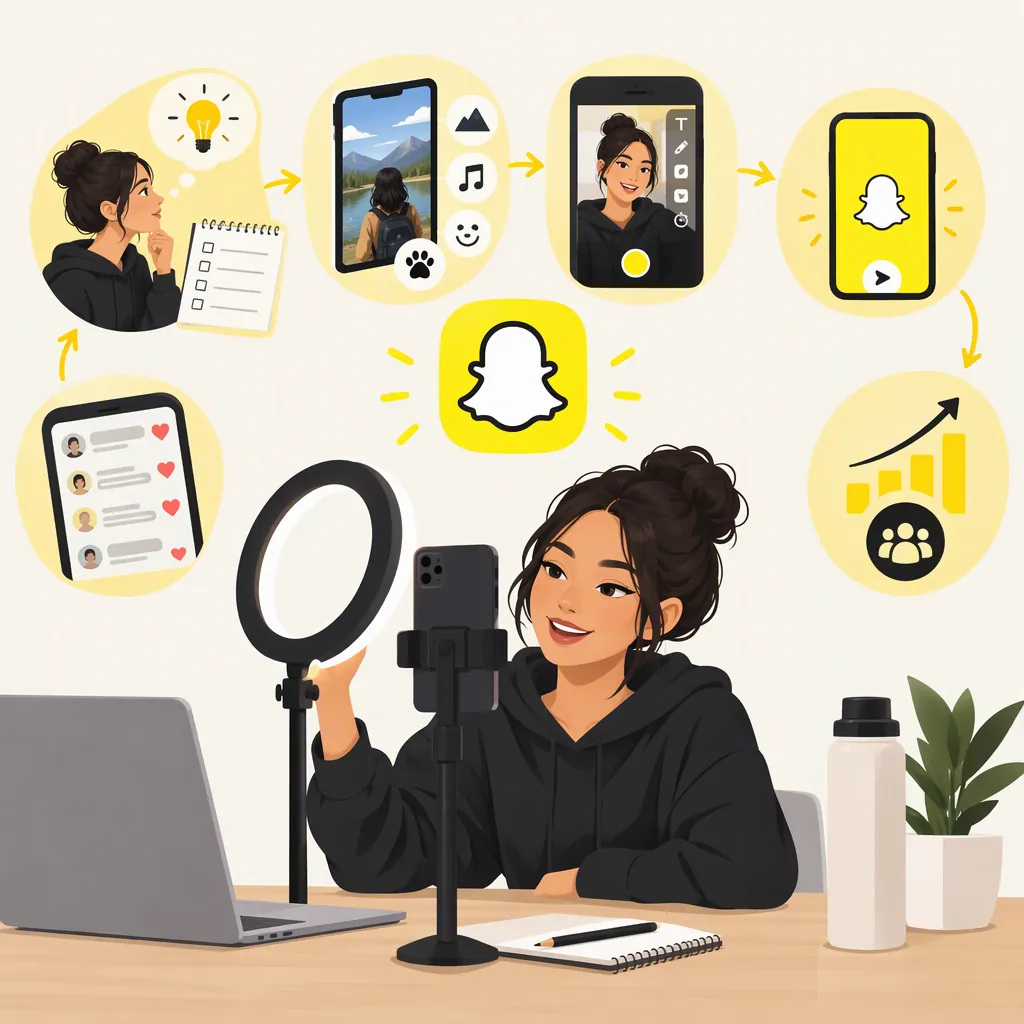
To start as a Snapchat content creator, choose an audience, develop a repeatable content idea, and practice publishing with a schedule you can sustain. Build a portfolio and review your results before treating creation as a career. Starting to create is different from qualifying for platform earnings: Snap’s December 2024 announcement described an invitation-based monetization program with audience, activity, and performance criteria—not automatic payment for posting. Those historical criteria should not be treated as confirmation of today’s requirements. [citation-1]
Choose an Audience and a Repeatable Idea
Start with a specific audience need rather than a promise to post everything about your life. Possible directions include beginner cooking demonstrations, explanations of a hobby, or short comedy built around a recurring situation. These are editorial starting points, not predictions of growth.
Write one sentence that connects your audience, topic, and approach: “I make content for people who want to understand ___, using ___.” Then list ten ideas that fit it. If you struggle to find ten, narrow the audience or choose a subject you can explore more comfortably.
Set privacy boundaries before filming. Decide which locations, relationships, work details, and personal routines will remain off-camera. Get permission before featuring other people, and avoid exposing identifying information in the background.
Creator Direction Worksheet
Audience: ___
Audience question or interest: ___
My topic: ___
My repeatable approach: ___
Three recurring series ideas: ___
Information I will keep private: ___
Weekly time limit: ___
Maximum starting budget: ___
Plan Content for Stories and Spotlight
Snap’s monetization announcement distinguishes Stories from Spotlight videos, with ads described within creator Stories and longer Spotlight videos. This establishes two relevant publishing formats, but does not establish that every creator can earn from either. [citation-1]
As a creative exercise, plan a connected sequence for a Story and a self-contained idea for a Spotlight video. For the sequence, give each part a purpose: introduce the situation, show what happens, and deliver a conclusion. For the standalone video, make the topic understandable without requiring viewers to know your earlier posts.
Before publishing, check that speech is understandable, on-screen text is readable, and the opening accurately represents what follows. Use material you created or have permission to use. These are production recommendations, not claims about Snapchat’s ranking system.
Two-Format Content Brief
Topic: ___
Viewer takeaway: ___
Story sequence:
1. Introduce the situation: ___
2. Show the process or development: ___
3. Deliver the conclusion: ___
Standalone Spotlight concept: ___
Opening line or image: ___
Footage and audio permissions checked: ___
Privacy review completed: ___
Use Your First Month as a Learning Cycle
Treat your first month as a manageable experiment, not a deadline for becoming profitable.
- Week 1: Choose your audience, draft ideas, and make a few practice pieces. Review clarity and privacy before publishing.
- Week 2: Publish at a pace that fits your available time. Record the topic, format, production time, and any performance information available to you.
- Week 3: Repeat a promising idea with one deliberate change, such as a clearer opening or simpler explanation. Avoid changing everything at once.
- Week 4: Review the work. Decide what to repeat, improve, or stop.
Compare results cautiously. A small collection of posts cannot establish why a piece performed well or predict future income. Include production effort in your review: a format that takes too much time may be difficult to sustain even if it attracts attention.
Weekly Review Log
Week: ___
Pieces published: ___
Topics and formats tested: ___
Production hours: ___
Performance information available: ___
Audience questions or feedback: ___
What I observed, without assuming a cause: ___
One change to test next week: ___
Separate Creating from Monetization Eligibility
Do not make platform payments the starting assumption for your creator plan. In its December 16, 2024 announcement, Snap said creators may be eligible for invitation to its unified monetization program if they met the following criteria: [citation-1]
- At least 50,000 followers.
- At least 25 posts per month to Saved Stories or Spotlight.
- Posting to Spotlight or Public Stories on at least 10 of the previous 28 days.
- Within the previous 28 days, at least one of: 10 million Snap views, 1 million Spotlight views, or 12,000 hours of view time.
The announcement also said eligible creators would be able to monetize Spotlight videos longer than one minute beginning February 1, 2025. It directed readers to further program details and eligible-country information. [citation-1]
These are dated announcement criteria, not a verified current eligibility checklist. Meeting the listed numbers was not presented as a guarantee of invitation, acceptance, or earnings. Before making financial plans, check the current program terms, country availability, and requirements applicable to your account.
Build a Portfolio Before Making Career Commitments
A useful beginner portfolio shows what you can consistently produce. Select a small set of strong pieces and explain the audience, idea, and your role in each. Label practice briefs as practice; do not present them as paid client work.
If you consider sponsored work or content-production services, define the scope before agreeing to a project: deliverables, revisions, deadlines, payment, usage rights, and any exclusivity. Establish how commercial relationships will be disclosed, and check the rules that apply to the project rather than assuming one disclosure method works everywhere.
Keep career planning separate from audience milestones. Record expenses, time spent, and payments actually received. Set a review point before increasing spending or reducing other work. A growing audience alone is not a budget, and projected income should not be treated as received income.
Portfolio Entry Template
Piece or series title: ___
Audience and purpose: ___
My role: ___
Published work or clearly labeled practice sample: ___
Production constraints: ___
Results I can document: ___
Permissions and usage restrictions: ___
What I would improve next time: ___
FAQ
Do I Need 50,000 Followers to Start Creating Snapchat Content?
Do not confuse starting a content practice with monetization eligibility. The 50,000-follower threshold appeared in Snap’s December 2024 criteria for potential invitation to its monetization program; it was not described there as a prerequisite for beginning content creation. Account-level publishing eligibility is a separate question. [citation-1]
How Often Should a Beginner Post?
Choose a pace you can maintain while checking quality, permissions, and privacy. Start with a small weekly plan and adjust after reviewing your production time and results. Do not treat historical monetization posting thresholds as a universal beginner schedule.
Does Meeting Snapchat’s Published Thresholds Guarantee Payment?
No guarantee follows from the cited announcement. Snap described creators as potentially eligible for invitation, not automatically entitled to payment after reaching the listed thresholds. The announcement also does not establish current requirements or predict an individual creator’s earnings. [citation-1]
What Should My First Career Goal Be?
Aim to build a repeatable production process and a small, accurately labeled portfolio. Track your time and costs, learn from audience feedback, and assess whether you can sustain the work before making larger financial commitments.