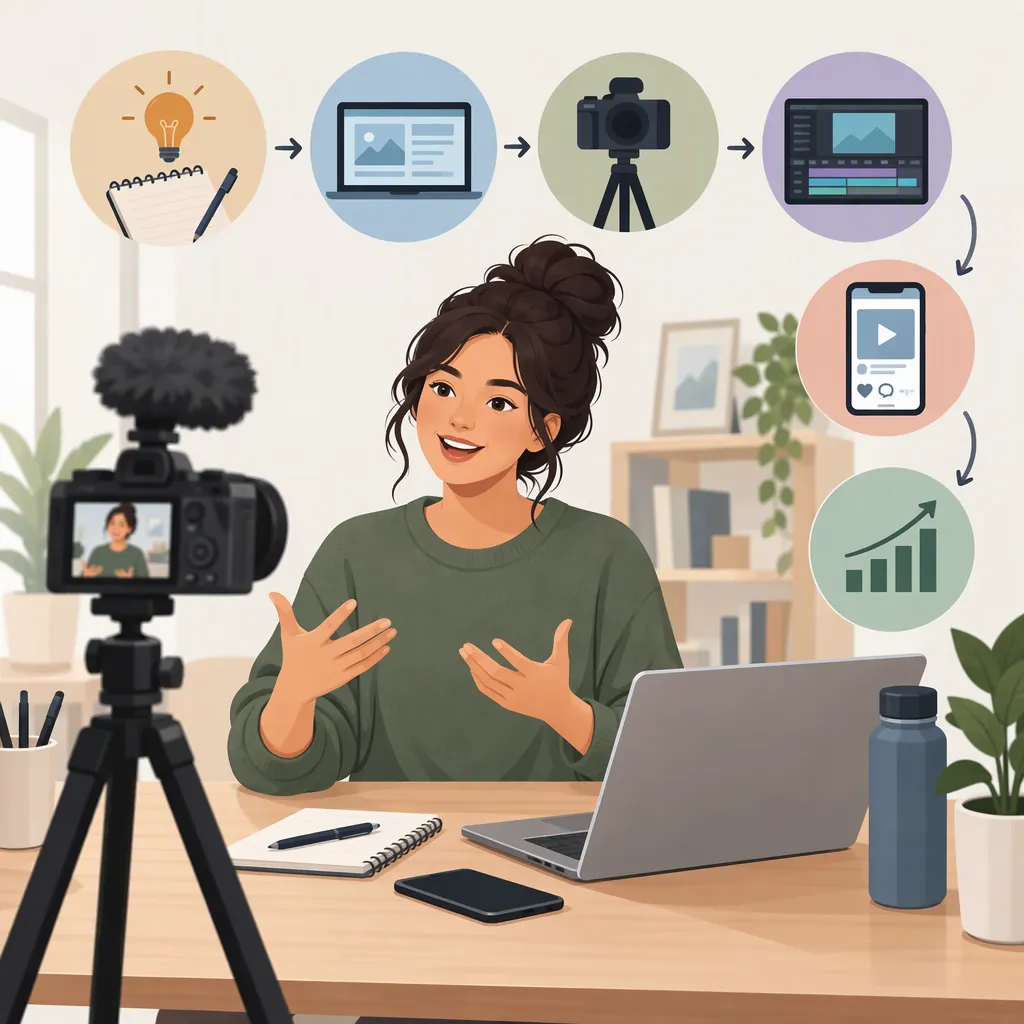
How to Become a Content Creator: From First Post to Career
To become a content creator, choose an audience and topic, select a suitable format and platform, practice the relevant production skills, and publish on a manageable schedule. Review audience feedback, improve your work, and collect strong samples in a portfolio. You can pursue an independent audience, freelance projects, or an in-house or agency role; publishing content does not guarantee income. [c1] [c2]
1. Choose Your Audience and Career Direction
A content creator produces media for an audience. That media can include articles, videos, photographs, graphics, podcasts, or newsletters. The role is not limited to being an influencer: creating useful or entertaining work and influencing purchasing decisions are related but distinct activities. [c1] [c2]
Start with two decisions:
- Who is the content for? Describe a specific group and what they want to learn, solve, or enjoy.
- Who are you creating for? Your own audience, a client, or an employer?
Coursera describes both self-employed creators and creators working within organizations. HubSpot also distinguishes freelance, in-house, and agency roles. These routes can overlap, but they require different priorities. Independent work centers on your audience and publishing direction; client or employer work also needs to meet an external brief. [c1] [c2]
For a starting exercise, complete this sentence: “I make [format] for [audience] who want [specific benefit].” For example: “I make short cooking demonstrations for beginners who want to prepare simple weekday meals.” This is an illustrative positioning statement, not a proven business opportunity.
2. Test a Niche Before Committing
Both Coursera and HubSpot recommend identifying a niche and understanding the audience. HubSpot also allows room for experimentation rather than treating the first niche as permanent. [c1] [c2]
Choose a starting topic where your interests, current knowledge, and audience questions overlap. Avoid spending weeks perfecting a brand before making anything.
Use this small research exercise:
- List questions people ask publicly about the topic.
- Read or watch existing content addressing those questions.
- Note what is clear, what is confusing, and what you could explain differently.
- Draft three ideas you can produce with your current resources.
For the cooking example, those ideas might be a basic preparation demonstration, an explanation of a common mistake, and a simple planning checklist. These are hypothetical examples, not evidence of audience demand.
Treat your niche as a working hypothesis. After publishing, compare your assumptions with actual questions and feedback rather than copying another creator’s presentation.
Starter Content Brief
Audience: [Who is this for?]
Question or need: [What does the audience want?]
Main takeaway: [What should someone understand afterward?]
Format: [Article, video, audio, photo, or graphic]
Original contribution: [Your explanation, demonstration, or perspective]
Facts to verify: [Claims that need supporting sources]
Production limit: [Time and resources available]
Next idea: [A related question to explore]
3. Select a Format and Build Essential Skills
Choose a format that serves the subject and fits your current strengths. A demonstration may call for video; a detailed explanation may suit writing; a conversation may suit audio. HubSpot recommends considering the niche, audience, and content medium when choosing a platform. wikiHow recommends beginning with one platform to keep the initial effort focused. [c2] [c3]
Before committing, check whether the platform supports your intended format and whether relevant audience conversations are happening there. Do not choose solely because another creator appears successful on it.
Practice the skills your first format requires:
- Writing: Explain one idea clearly, organize the sequence, and edit unnecessary words.
- Video: Practice framing, recording understandable audio, selecting footage, and trimming.
- Photography or graphics: Work on lighting, composition, and readable visual hierarchy.
- Across formats: Develop research, communication, organization, and deadline management.
The references identify writing, photography, editing, design, research, and workplace skills as useful parts of creator work. You do not need to master every discipline before producing a first sample. [c1] [c2]
Start with equipment you already have where practical. Coursera identifies a smartphone as a possible starting tool. Test the actual output before buying equipment; make purchases to address a specific limitation rather than to feel ready. [c1]
4. Use a Manageable First-Month Plan
The sources recommend planning content and maintaining a consistent publishing schedule, but they do not establish one posting frequency that works for every beginner. [c1] [c2] [c3]
The following is a suggested learning plan, not a requirement or a promise of growth. Scale it to your available time. The goal is to complete the cycle of planning, producing, publishing, and reviewing—not to hit a follower target.
Before publishing, check that the main point is understandable, factual claims have support, and the finished piece is readable or audible. Aim for a useful first version rather than endless revisions.
Keep a simple calendar with the topic, format, production deadline, publication date, and review notes. If the schedule repeatedly slips, reduce the scope or frequency before adding more platforms.
Four-Week Learning Plan
| Week | Suggested work | Completion check |
|---|---|---|
| 1 | Define an audience, choose one format, and draft three ideas. | Each idea addresses a clear question or interest. |
| 2 | Produce and publish one small piece. Record the time required. | The piece has one clear takeaway and has been reviewed. |
| 3 | Produce a related piece and review available feedback. | You can name one change made from the first attempt. |
| 4 | Review the work, choose portfolio candidates, and plan the next cycle. | You have a sustainable schedule and one skill to practice next. |
5. Review Results and Build a Portfolio
Publishing is the start of a feedback cycle. HubSpot recommends reviewing performance measures such as views, comments, shares, and followers, while wikiHow emphasizes responding to audience engagement. [c2] [c3]
Choose measures that fit your goal. For an educational piece, look at the questions people ask and whether the explanation needs clarification. For audience reach, review available views or impressions. Also record production time so you can judge whether your schedule is realistic.
Avoid treating one unusually strong or weak post as a final verdict. Write down what you changed and what you want to test next. Where the audience is still small, editorial review and direct feedback can be useful alongside platform metrics.
Collect work that demonstrates your skills. Coursera recommends a portfolio and resume for company roles or client work and notes that beginners can use samples to show their abilities. [c1]
For each portfolio item, include:
- The intended audience and purpose.
- Your role and the work you completed.
- The finished sample.
- Results only when you have actual, explainable data.
- A short note on what you learned or improved.
Label self-directed samples as such. Do not imply they were commissioned by a brand or invent performance numbers to make them look stronger.
6. Explore Paid Work Without Assuming Income
Content creation can become paid work through different arrangements. HubSpot describes freelance, in-house, and agency roles, along with sponsorships, commissioned brand content, and affiliate arrangements. Coursera also describes project-based freelance work and employment within marketing teams. [c1] [c2]
Use your preferred work style to compare the routes:
- Independent publishing: You choose the editorial direction, but an audience does not automatically produce revenue.
- Freelance services: Define the deliverable, deadline, revision expectations, and payment terms before accepting a project.
- In-house employment: Compare your samples and skills with the specific responsibilities in a job description.
- Agency employment: Consider whether you enjoy creating for multiple clients and working within team processes.
For service work, a narrow deliverable is easier to evaluate than a vague promise to “grow a brand.” An illustrative scope might be one edited demonstration video from supplied footage, with an agreed format and revision limit. It is not a recommended price or a guarantee of demand.
Income expectations need caution. The references describe variable freelance earnings and the absence of guaranteed freelance income. Their salary and platform examples do not establish what a particular beginner will earn. Evaluate actual opportunities, workload, costs, and payment terms rather than assuming that consistency alone will lead to a full-time career. [c1] [c2]
FAQ
Can I Become a Content Creator with No Experience?
You can begin by practicing a format and creating self-directed samples. Coursera specifically notes that samples can demonstrate skills when you are just starting. Beginning is different from securing paid work: use those samples to identify gaps and build a portfolio. [c1]
Do I Need a Degree to Become a Content Creator?
There is no single educational route described in the provided guides. wikiHow says special training is not needed to begin, while Coursera notes that education can matter more for traditional company roles. Check individual job requirements rather than assuming a degree is always required or never relevant. [c1] [c3]
How Often Should I Post as a Beginner?
Choose a schedule you can sustain while leaving time for research, production, and review. The sources recommend consistency but do not establish a universal posting frequency. Start with a manageable workload and adjust after measuring how long each piece takes. [c1] [c2]
Do I Need a Large Following to Get Paid?
Not every paid route depends on your personal audience. Freelance, in-house, and agency creators can produce content for organizations. Audience-based sponsorships and platform monetization are different arrangements; their requirements should not be treated as universal requirements for creator work. [c1] [c2]