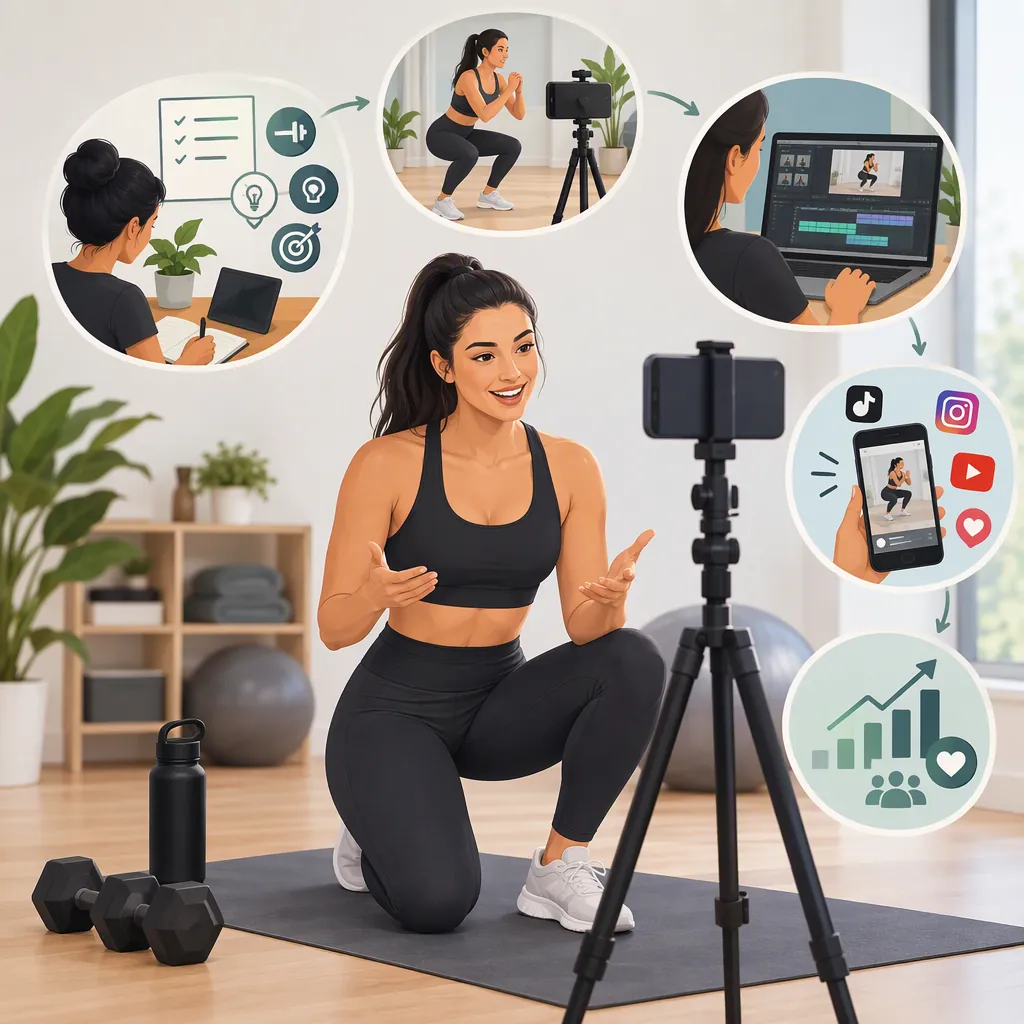
How to Become a Fitness Content Creator
To become a fitness content creator, choose a specific audience and fitness topic, establish an honest profile, and start publishing useful content on one or two platforms. Build a manageable production routine, respond to audience questions, and use analytics to refine your work. Explore income options separately from audience growth, and keep fitness advice within your knowledge and qualifications. These steps reflect the supplied creator guides, not a guaranteed route to followers or earnings. [c2] [c3]
Choose an Audience and a Clear Fitness Focus
Start with a narrower idea than “fitness for everyone.” Socially Powerful recommends defining a niche around your interests, expertise, and the people you want to help. Its examples include strength training, home workouts, beginner content, yoga, and mobility. [c2]
For your first content series, combine three decisions:
- Audience: Who is the content for?
- Topic: What can you explain accurately or document honestly?
- Format: Will you teach, demonstrate, discuss, or share a personal learning process?
An example positioning statement is: “I document how I organize home workouts around a busy schedule.” That is different from claiming to prescribe the right program for every busy person.
Write down what you will not cover, too. A useful boundary might be avoiding individualized injury, rehabilitation, or nutrition advice when it is outside your qualifications. Treat this as an editorial safeguard rather than assuming that a disclaimer makes any advice appropriate.
Fitness Creator Positioning Worksheet
Audience: ___
Main topic: ___
Question my content will address: ___
Relevant qualifications or experience I can accurately describe: ___
Content format I can sustain: ___
Topics outside my scope: ___
Positioning sentence: I create ___ for ___, focusing on ___.
Build an Honest Profile and Choose Your Platform
Your profile should explain what viewers can expect, not imply credentials or results you cannot substantiate. Include your topic, your content format, and any relevant qualifications stated precisely. Distinguish personal experience from professional instruction.
Socially Powerful suggests starting with one or two platforms rather than trying to publish everywhere. It describes Instagram and TikTok as options for visual, short-form fitness content and YouTube as an option for longer tutorials, vlogs, and workout videos. These are format suggestions, not proof that a particular platform will perform best for you. [c2]
Choose your starting platform by answering:
- Can the format accommodate the explanation your topic needs?
- Can you produce it with your current time and equipment?
- Do you have a reason to believe your intended audience uses it?
For an initial test, prioritize understandable audio, readable captions, and framing that shows what you are discussing. Avoid making an expensive equipment purchase a prerequisite for completing your first practice videos.
Create Useful Content with Clear Boundaries
The supplied guides identify workout tutorials, fitness tips, personal journeys, and behind-the-scenes content as possible formats. Photogenics also highlights photography, videography, social media skills, and fitness knowledge as relevant creator skills. [c2] [c3]
For a starting mix, use three repeatable content categories:
- Explain: Answer one question within your competence.
- Document: Share a routine, preparation process, or lesson from your own experience without presenting it as a universal prescription.
- Discuss: Respond to a general audience question or explain what you are still learning.
Give each post one main purpose. A short clip does not need to cover an entire training philosophy.
Before publishing, review any exercise or health claim for accuracy and scope. Avoid promising a body transformation, a fixed outcome, or a result by a particular date. Obtain permission before featuring another person, and consider whether private messages or identifying details need to be omitted. These are suggested editorial practices, not a complete medical or legal compliance checklist.
Single-Post Brief and Review Checklist
Audience question: ___
One takeaway: ___
Format: explanation / demonstration / personal documentation / discussion
Opening sentence: ___
Points or shots needed: ___
Basis for factual claims: ___
Relevant limits or qualifications to state: ___
Permission needed for people or material shown: ___
Review: Is the takeaway clear? Are claims supported? Does the post imply a guaranteed result? Is anything outside my scope?
Use a Manageable First-Month Plan
A sustainable routine is more useful than a posting target you cannot maintain. Socially Powerful recommends planning content, batching production, and allowing time for rest; it explicitly distinguishes consistency from daily posting. [c2]
The following is a suggested practice plan, not a tested growth formula. Adjust the number of posts to fit the time needed for research, filming, editing, and review. Finishing the month with a repeatable workflow is a reasonable learning goal; reaching a particular follower count is not a promised outcome.
Four-Week Fitness Content Starter Plan
Week 1 — Define and prepare
Complete the positioning worksheet. Choose one primary platform. Draft six audience questions. Record one practice video and review its clarity.

Week 2 — Publish a small test
Publish two pieces on different questions. Record how long each takes to make. Save recurring audience questions without exposing private information.

Week 3 — Repeat and refine
Make two more pieces using the format you can sustain. Batch similar recording tasks. Improve one element, such as pacing, captions, or framing.

Week 4 — Review and plan
Compare available analytics and the substance of audience responses. Note what needs correction or clearer explanation. Choose the next four topics and a realistic ongoing schedule.
Build Community and Learn from Results
Audience development involves more than publishing. Photogenics recommends responding to comments and building a community, while Socially Powerful recommends reviewing analytics such as reach, engagement, follower growth, and audience behavior. [c2] [c3]
For a practical review, separate three questions:
- Discovery: Which posts reached people?
- Usefulness: Which posts prompted relevant questions or thoughtful responses?
- Sustainability: Which posts could you produce again without an unreasonable workload?
Compare similar formats where possible, and treat a small sample as a clue rather than a conclusion. Change one element at a time so your next test has a clear purpose.
Answer general questions respectfully, but do not turn every comment into individualized coaching. If a question exceeds your expertise, say so. Collaborations can be another content option; Socially Powerful recommends keeping them genuine and aligned with the creator's brand. [c2]
Weekly Content Review
Post and topic: ___
Format and length: ___
Production time: ___
Available reach or viewing data: ___
Meaningful questions or responses: ___
Corrections or clarifications needed: ___
What I will repeat: ___
One change for the next test: ___
Treat Income as a Separate Business Decision
Publishing useful content and earning income are related activities, but neither guarantees the other. Photogenics lists sponsorships, affiliate marketing, fitness guides, and merchandise as possible income routes for fitness content creator models. Socially Powerful also discusses programs and brand deals. These sources do not establish typical earnings or a reliable timeline to profitability. [c2] [c3]
Before considering an opportunity, identify what you would actually deliver: sponsored content, product referrals, an educational resource, or a service. Then consider the time, costs, qualifications, permissions, and obligations involved.
For a prospective collaboration, prepare a small portfolio of relevant work and accurate audience information. Do not invent past clients, inflate results, or describe unpaid samples as commissioned work. Clearly identify commercial relationships and check the current rules that apply to the platform and your jurisdiction; the supplied references are not a complete compliance guide.
If your intended business includes personalized fitness coaching, investigate the qualifications and scope requirements for that service separately. Creating public fitness content is not, by itself, evidence of competence to provide individualized care.
FAQ
Do I Need Certification to Become a Fitness Content Creator?
The supplied guide discusses both certified trainers and fitness enthusiasts as potential creators, but it does not establish certification requirements for every activity or location. Sharing a personal fitness journey is different from offering individualized coaching. State your qualifications accurately and check the requirements for any paid service you intend to provide. [c2]
How Often Should I Post Fitness Content?
Choose a schedule that leaves enough time for preparation, accuracy checks, and rest. Socially Powerful recommends realistic scheduling and batching, and says consistency does not require daily posting. The two-post weekly starter plan above is a suggested practice schedule, not a platform requirement or growth guarantee. [c2]
Is a Fitness Content Creator the Same as a Fitness Model?
Not necessarily. Photogenics describes a fitness content creator model as someone who combines traditional modeling with digital fitness content. That is a particular route; the broader creator guide also includes educational content, personal stories, tutorials, and community building. [c2] [c3]
How Long Does It Take to Earn Money?
The supplied references do not establish a dependable timeline or typical income. They describe possible routes such as sponsorships, affiliate marketing, and selling guides or merchandise. Treat those as options to evaluate, not earnings forecasts or evidence that audience growth will become a sustainable business. [c3]