What Is a Content Creator? Definition, Work, and Roles
A content creator is someone who makes material for an audience, such as articles, videos, podcasts, photographs, or graphics. The material may educate, entertain, or communicate a message. Creators can publish their own work or produce content for an organization; the role is broader than posting on social media. [c1] [c4]
What Makes Someone a Content Creator?
The defining activity is creating content: turning information, ideas, or experiences into something an audience can read, watch, hear, or otherwise experience. Adobe describes the term broadly, covering entertaining or educational material delivered through different media and channels. [c1]
A digital content creator focuses on digital media, such as website articles, online videos, podcasts, and social posts. Coursera's description emphasizes producing that media for a specific target audience. [c4]
The term does not describe one standardized job. A writer producing a newsletter and a videographer making an instructional video may both be content creators, even though their production tasks differ. Adobe explicitly notes that there is no single unified job description. [c1]
What Do Content Creators Make?
Content creation covers several formats, not just short social videos. Common examples include: [c1] [c4]
| Format | Examples of Content |
|---|---|
| Written | Articles, blog posts, newsletters, website copy, e-books |
| Visual | Photographs, illustrations, graphics, infographics |
| Video | Recorded videos, livestreams, films |
| Audio | Podcasts and other recorded audio |
| Brochures, books, magazines, packaging |
Format and channel are different choices. A video is a format; a social platform or website is a place to distribute it. Adobe's overview includes social media, websites, live events, print, radio, cinema, and television as settings for content. [c1]
Creators do not need to specialize in every format. Coursera describes building expertise in one or more content formats, while Adobe recommends choosing a niche based on expertise and the kind of work a creator wants to do. [c1] [c4]
What Does a Content Creator Do?
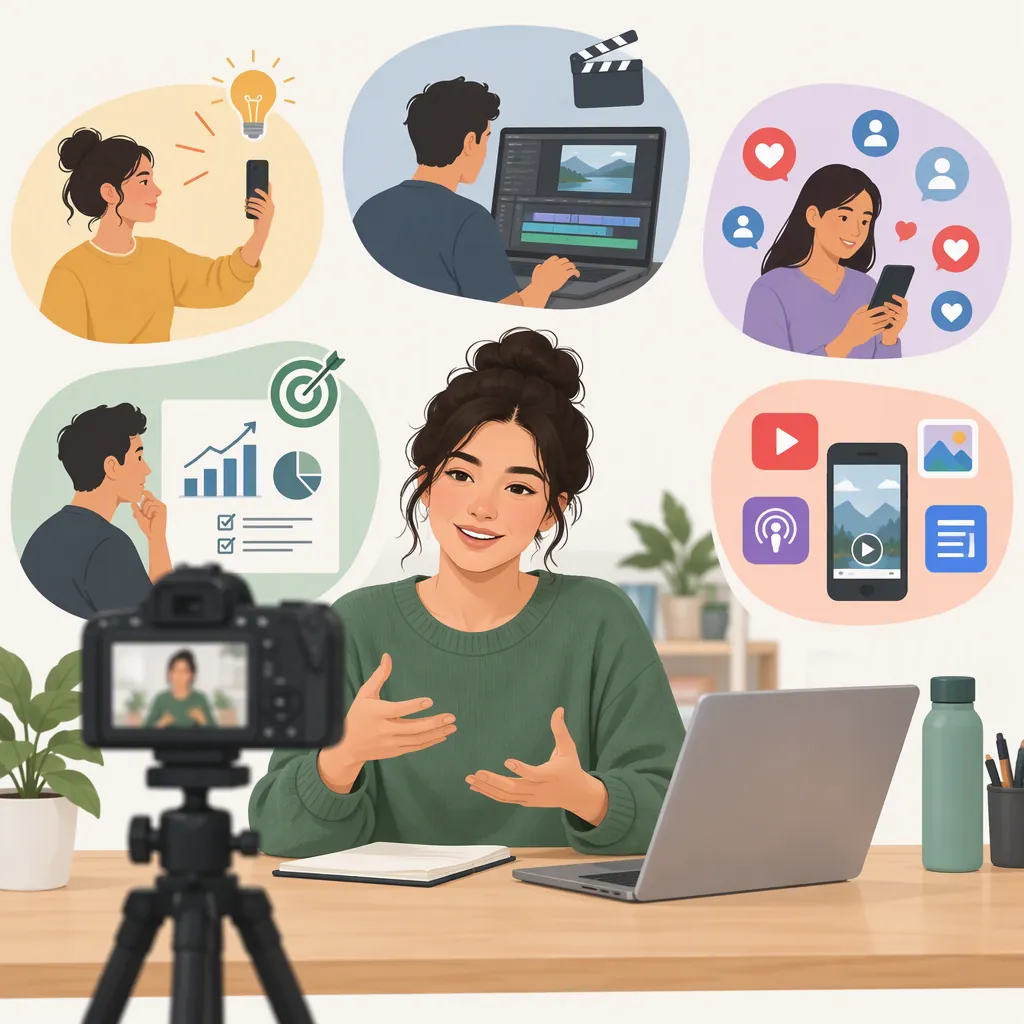
Producing the finished piece is only part of the work. Depending on the assignment, a creator's responsibilities can include: [c4]
- Planning: identifying the audience, developing ideas, and organizing a content calendar.
- Production: writing, recording, photographing, or designing the material.
- Editing: refining clarity, accuracy, style, and presentation.
- Collaboration: working with designers, marketers, subject matter experts, or external contributors.
- Content management: organizing files, updating older material, and repurposing existing work.
- Evaluation: reviewing performance metrics and recommending changes.
For some digital roles, the work also includes search engine optimization (SEO), publishing social posts, or responding to audience comments. These are possible responsibilities, not requirements for every creator. [c1]
A useful way to interpret a job listing is to examine its actual deliverables. A position centered on writing articles calls for different production skills than one centered on recording and editing video, even if both use the same title. [c4]
How Do Content Creators Work?
Content creation can be personal publishing or paid work. Adobe discusses individuals creating for their own audiences as well as creators making communications for businesses. [c1]
For professional work, two common arrangements are: [c4]
- Freelance: producing content independently for clients, with projects and working arrangements negotiated separately.
- In-house: creating content as an employee for an organization's website, social accounts, or other channels.
Independent creators may also run their own blogs, video channels, or social accounts. Coursera lists sponsorships, affiliate marketing, merchandise, subscriptions, and platform monetization among possible income sources. These are options, not guaranteed earnings. [c4]
A public following is therefore not the only way to understand the role: creating material for an employer or client also fits these descriptions. The supplied career overviews describe possible arrangements, not universal hiring requirements or income outcomes. [c1] [c4]
Which Skills Matter?
The relevant skills depend on the format. Coursera identifies writing and storytelling, photography and video production, editing, design, and marketing or social media knowledge as useful areas of expertise. Its task descriptions also emphasize collaboration and reviewing work for clarity and accuracy. [c4]
Audience understanding connects these specialties. A technically polished piece still needs a clear purpose and an audience it is intended to serve. Both Adobe and Coursera recommend learning about the audience when planning content. [c1] [c4]
For responsible practice, creators should also consider accuracy, privacy, and permission to use other people's material. Wikipedia's overview identifies misinformation, privacy, copyright, and plagiarism as issues in content creation. That overview provides general context, not a substitute for legal advice or a platform's current rules. [c2]
FAQ
Is a Content Creator Only Someone Who Posts on Social Media?
No. Social media is one distribution channel. Content creators also make articles, newsletters, podcasts, books, brochures, and other material for websites, print, and additional media. [c1]
Do You Have to Get Paid to Be a Content Creator?
No. The broad definition centers on making material, not receiving payment. Content creation can involve personal expression or sharing information as well as professional work. [c1] [c2]
Does a Content Creator Need to Write, Design, and Edit Video?
Not necessarily. Creators can specialize in one or more formats. The skills needed depend on the work: writing-focused assignments differ from photography, audio, or video production. [c1] [c4]