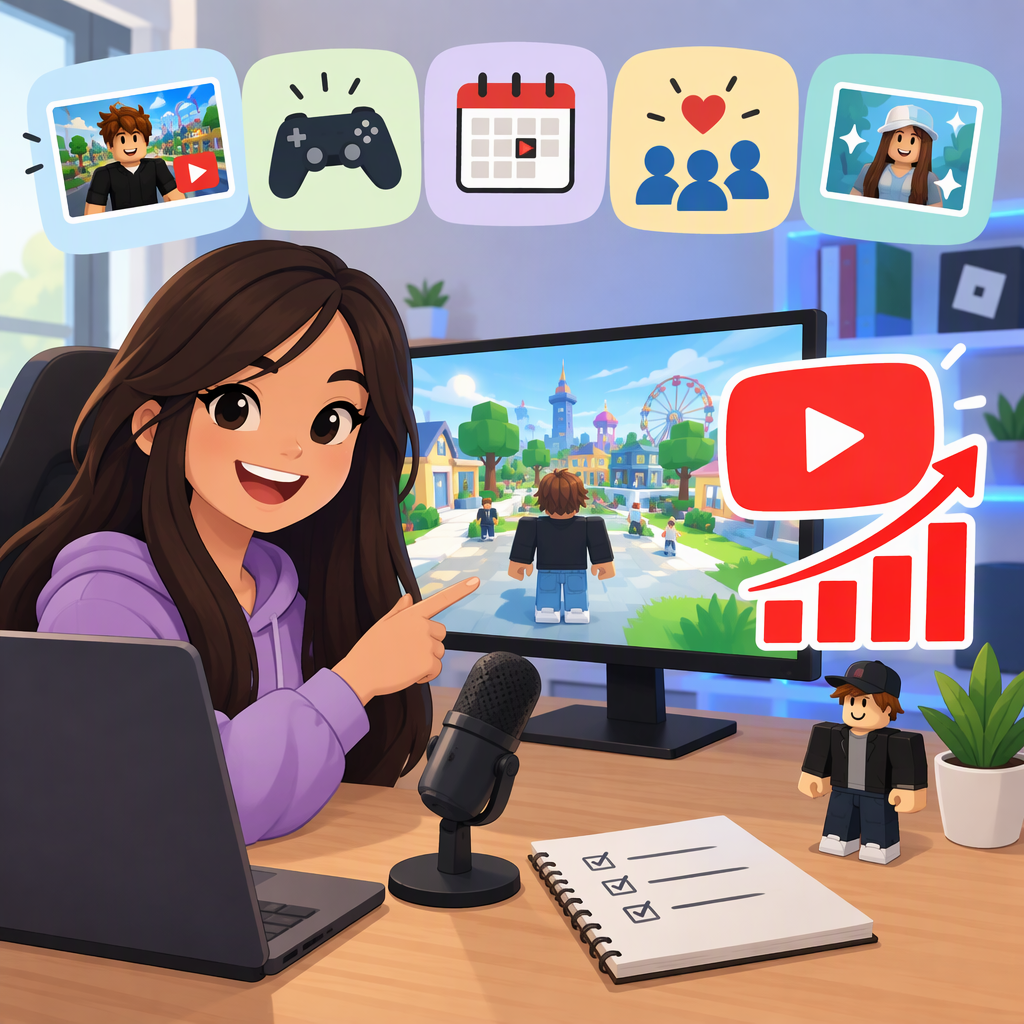
How to Get More Subscribers on YouTube for Roblox Life Content
If you mean Roblox life-simulation or role-play videos, focus on making it clear who your channel is for, what kind of Roblox content you make, and what viewers can expect from future videos. Then choose video ideas for that audience, present each video accurately, and use your channel’s analytics to decide what to test next. These steps can help you build a more coherent channel, but no single tactic guarantees subscribers.
“Roblox life” could also mean a particular game or channel named Roblox Life. The guidance below treats it as a content niche; if you mean a specific game or creator, check that name before using game-specific ideas.
1. Write a Specific Channel Promise
A viewer should be able to tell what they’ll get from your channel. Start by filling in:
I make [kind of Roblox video] for [intended viewer] who want [what they’ll get from watching].
For example, as an illustrative positioning idea—not a proven growth formula: “I make short Roblox role-play stories for viewers who enjoy following one character through funny, dramatic situations.” Your version might focus on challenges, beginner-friendly play, or a particular type of story.
A more focused promise gives viewers a clearer expectation; a broader one leaves more room to try different Roblox games or formats. The trade-off is editorial: too much variety can make the channel’s common thread harder to explain, while a very narrow focus may leave you fewer kinds of videos you want to make. Choose a promise you can sustain and refine it as you learn what your viewers respond to.
2. Choose Repeatable Ideas for That Audience
Rather than picking each upload in isolation, brainstorm several ideas that fit the same viewer and promise. For a role-play channel, illustrative ideas might include a continuing character storyline, a “what happens if…” scenario, or a challenge within a game you already play. These are starting points, not formats proven to increase subscribers.
For each idea, ask:
- Who would choose this video? Name the viewer, not just the game.
- What happens in this specific video? Be able to describe its central story, question, or challenge in one sentence.
- Could it lead naturally to another video? A recurring theme can help you plan, but don’t imply that every video is a series.
- Does it fit the channel promise? If not, decide whether it belongs on this channel or whether you’re deliberately testing a broader direction.
A simple planning example: if your promise is Roblox role-play stories, list three different situations for one recurring character. Keep the character or storytelling style consistent, while varying the situation. That gives you a coherent starting point without claiming that a series will automatically attract subscribers.
3. Make the Title, Thumbnail, and Opening Match the Video
The title and thumbnail should give viewers an accurate idea of what they’ll see. YouTube advises creators to make titles accurate and succinct, and says a misleading title can lead viewers to stop watching. It also recommends that the opening deliver on the promise made by the title and thumbnail. (support.google.com)
For example, if a role-play video is about a character trying to keep a secret, its title and thumbnail could emphasize that conflict—but should not suggest a different event or outcome. In the opening, get to the scenario promptly instead of making viewers wait through a long setup that doesn’t deliver on the packaging.
YouTube describes content that is clear, consistent, and representative as a way to help people understand what a channel is about. That supports a practical check before publishing: Would a new viewer understand the video, and does it represent the channel you say you’re making? (support.google.com)
4. Give Viewers a Clear Reason to Return
A subscription invitation works best as part of an honest explanation of what viewers can expect from the channel. If the video is one part of a continuing story, say what the next episode will follow only if you actually plan to make it. If the channel covers a recognizable kind of Roblox challenge, explain that viewers can expect more of that kind of content.
You can invite interested viewers to subscribe, but don’t promise a schedule or future video you may not deliver. A call to action is an invitation, not a guarantee of growth. YouTube’s creator guidance suggests asking viewers to subscribe and using playlists to organize content; these are available options, not evidence that either will produce a particular number of subscribers. (youtube.com)
5. Review Results and Choose One Next Test
Use YouTube Studio Analytics to look for patterns, not a universal target number. YouTube’s analytics documentation describes metrics including impressions, click-through rate, views, watch time, and subscribers gained from different content types. It also advises considering click-through rate in context rather than on its own. (support.google.com)
Try this review after publishing a few videos aimed at a similar audience:
- Compare like with like. Look at videos with a similar topic or format rather than treating every upload as directly comparable.
- Check the viewer journey. YouTube frames video performance in terms of appeal (whether people click), engagement (whether they watch), and satisfaction (including watch duration and whether they return). Use the relevant reports to spot where a video may be losing viewers. (support.google.com)
- Look at subscribers as well as views. Views show that people watched; they don’t by themselves tell you which videos gained subscribers. YouTube’s content report includes subscribers gained by content type. (support.google.com)
- Write down one observation and one test. For example: “The role-play video with the clearest story premise gained more subscribers than my other recent role-play videos. Next, I’ll keep the format and make the title more specific.” This is a hypothetical example of how to reason from your own data, not a promised result.
- Change one meaningful element at a time where practical. If you change the topic, format, title, and opening all at once, it can be harder to tell what may have contributed to a difference.
There is no need to force a posting frequency or chase a benchmark that may not fit your audience. Use the data available for your channel, allow for differences between videos, and make the next test small enough that you can learn from it.
A Quick Pre-Publish Checklist
- Can I describe the channel’s intended viewer and promise in one sentence?
- Does this video fit that promise—or is it a deliberate experiment?
- Do the title and thumbnail accurately represent this video?
- Does the opening quickly deliver the experience they suggest?
- Have I made it clear what viewers can expect from future videos, without promising more than I can deliver?
- After publishing, will I review relevant analytics and decide on one next test?
The aim isn’t to copy a supposedly guaranteed growth tactic. It’s to make your Roblox channel’s value easier to recognize, deliver what each video promises, and use your own results to guide what you make next.