Why Isn’t My YouTube Channel Growing? What to Check
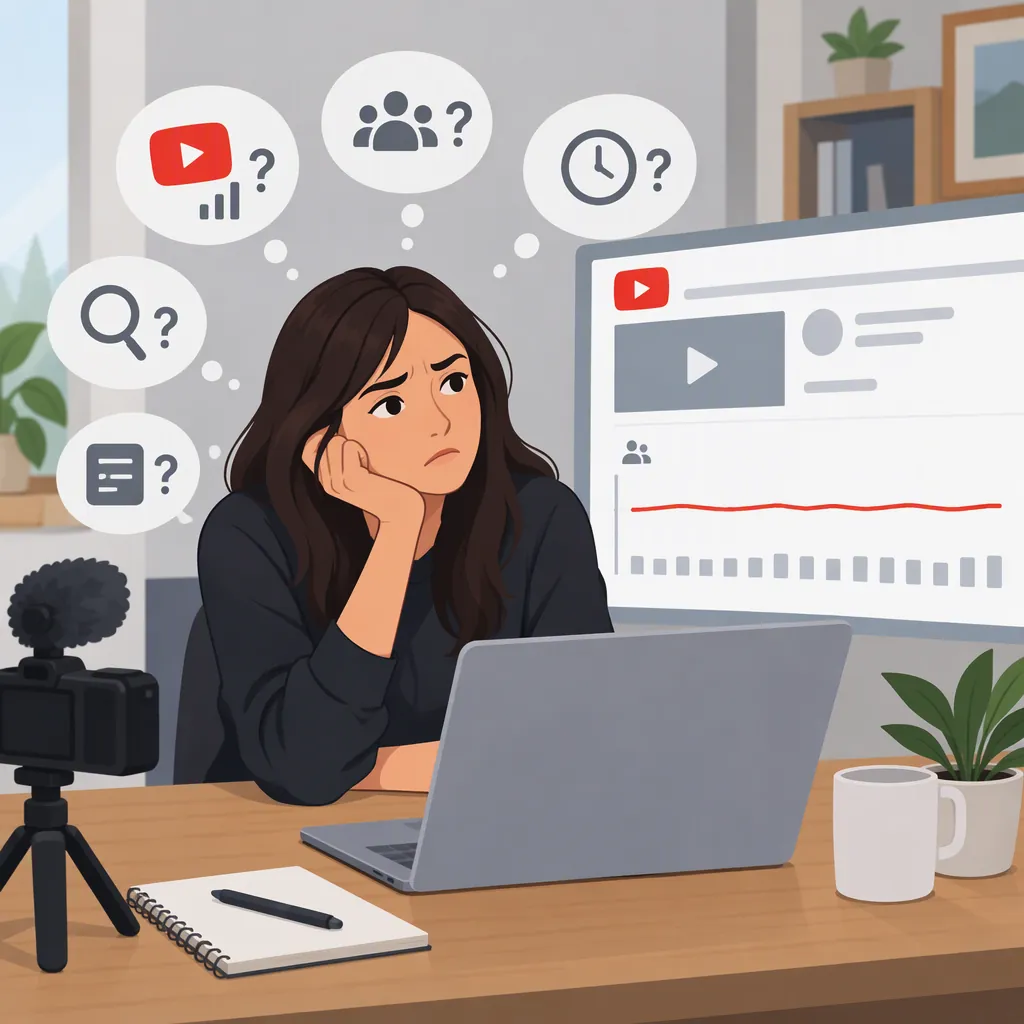
Your YouTube channel may be struggling because its topics do not match audience expectations, its titles do not communicate a clear reason to watch, or its videos take too long to deliver their promise. These are useful starting hypotheses—not a diagnosis of your channel. vidIQ’s growth troubleshooting article highlights audience consistency, title relevance, production skills, and tighter pacing as areas to review. Start with several comparable uploads and choose one specific weakness to test. [citation-1]
Define What “Not Growing” Means
Before changing your content, write down the problem precisely. Are new uploads getting fewer views? Are views holding steady while subscriber growth slows? Or did one unusually successful video make ordinary results look disappointing?
As a practical review method, compare several uploads with similar topics, formats, and time since publication. Keep substantially different formats separate so you do not mistake a change in content mix for a change in performance.
Use the information available in your channel analytics to distinguish three questions:
- Discovery: Are people encountering the videos?
- Viewing: When people encounter them, do they choose to watch and continue watching?
- Audience continuity: Does each upload give the intended audience a reason to return?
These questions organize your investigation; they do not establish why YouTube distributed a particular video. Without your channel data, there is no basis for identifying one definitive cause.
Check Whether Your Topics Serve the Same Audience
vidIQ’s article emphasizes honoring the expectation that brought viewers to a channel: its topic and the value of its videos. That makes audience fit a useful first check when growth stalls. [citation-1]
Write a one-sentence audience promise: “This channel helps this viewer get this outcome.” Then review your recent uploads against it.
Ask:
- Would the same person reasonably want to watch these videos?
- Is the benefit clear before someone presses play?
- Did you change the topic, tone, or difficulty level without making that shift clear?
- Does a successful upload suggest a relevant follow-up rather than an unrelated imitation?
You do not need to repeat the same video indefinitely. Instead, try an adjacent subject that serves the same audience need. Treat an isolated hit as a clue to investigate, not proof that every future video should copy it.
Make the Reason to Watch Clear
A title review should start with the viewer’s reason to care, not merely the subject of the video. The reference article recommends considering what a video is, what it does, and why it matters, with particular emphasis on that last question. [citation-1]
For example, “Desk Setup Update” names a subject. “A Small Desk Setup That Leaves Room to Work” communicates a more specific benefit—if the video actually demonstrates that benefit.
Review your title and thumbnail together:
- Can someone unfamiliar with your channel understand the subject?
- Is the promised benefit specific and accurate?
- Does the opening deliver what the packaging suggests?
If people encounter a video but rarely choose to watch, clarity is a reasonable hypothesis to test. It is not the only possible explanation. Avoid treating any single click-through figure as a universal verdict, and do not replace accuracy with exaggerated promises.
Review the Opening and Remove Unnecessary Delays
If viewers choose to watch but leave before the main value arrives, examine the opening and pacing. vidIQ’s article identifies long introductions, unhelpful sections, and drawn-out transitions as potential points where viewers leave. [citation-1]
Watch a recent upload with a narrow question: How quickly does this video begin fulfilling its title? Mark anything that delays that payoff, such as repeated setup, an unrelated channel introduction, or an explanation that adds no new information.
If retention information is available, use it to identify moments worth reviewing. A drop tells you where to look; it does not, by itself, tell you why someone left.
For your next upload, test an opening that states the problem or shows the result before adding necessary context. Keep explanations that help viewers understand the content. The goal is clearer delivery, not maximum speed.
Run One Focused Improvement Test
Changing your topic, title style, editing, and upload schedule together makes it difficult to interpret the result. As a troubleshooting approach, choose one suspected weakness and make a limited change you can describe clearly.
For skill development, the reference article recommends tackling one area at a time rather than trying to master everything at once. Its examples include audio, lighting, introductions, thumbnails, and titles. [citation-1]
Use the worksheet below before publishing. Afterward, compare the result with relevant earlier uploads at a similar age. Record mixed results and alternative explanations, not just improvements. One upload can suggest a next step; it cannot establish a guaranteed growth formula.
YouTube Growth Troubleshooting Worksheet
Problem: What has stalled—views, subscribers, or another outcome?
Comparison set: Which similar uploads will I review, and at what age?
Audience promise: Who is this video for, and what will it help them do?
Hypothesis: What specific weakness might explain the result?
Evidence: What observation supports that hypothesis?
Single change: What will I change in the next upload?
Expected signal: What would make the hypothesis more plausible?
Result: What changed, what stayed the same, and what remains uncertain?
Next decision: Repeat the test, revise it, or investigate another weakness.
FAQ
Should I Upload More Often If My Channel Is Not Growing?
Do not make frequency your automatic first fix. First identify what you want to improve: audience fit, the reason to click, or the viewing experience. The supplied reference emphasizes these areas and skill development; it does not establish an ideal upload frequency. Choose a schedule that lets you carry out and review a focused test. [citation-1]
Should I Change My Niche When Views Are Low?
Low views alone are not enough to justify a complete niche change. Review whether your recent topics serve a coherent audience and whether the videos deliver their promise. The reference article stresses maintaining the topic and value viewers expect. An adjacent-topic experiment is a more limited way to investigate audience fit than replacing the entire channel direction. [citation-1]
How Long Will It Take for These Changes to Grow My Channel?
The supplied source does not establish a reliable growth timeline or guarantee results. Use these checks to form testable hypotheses, not predictions. Review comparable uploads, document what changed, and look for a repeated pattern before deciding that a change helped.