How to Grow a Cooking YouTube Channel: A Practical, Repeatable Plan
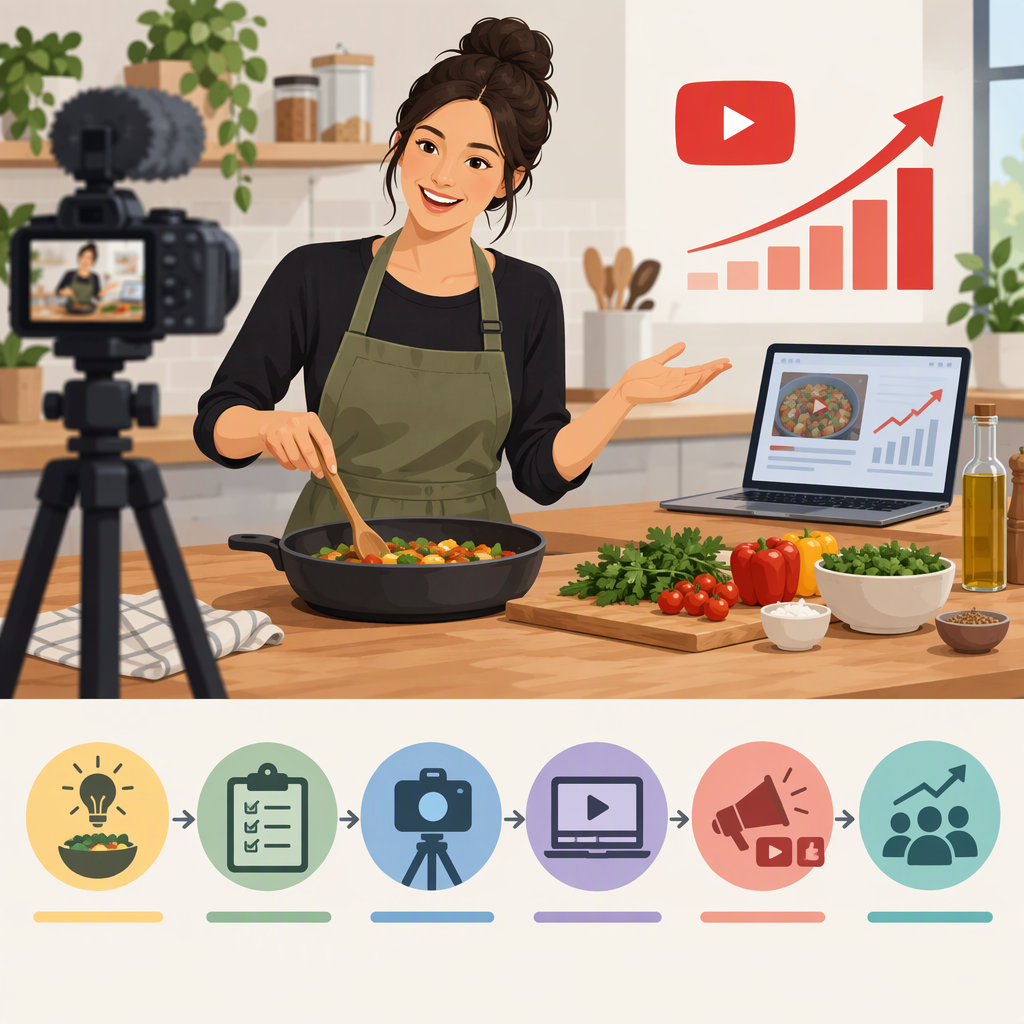
Growing a cooking channel is best approached as a repeatable cycle: choose a specific viewer and cooking need, make the video’s value clear, deliver on that promise, review what happened, and use one observation to plan a better next video. This won’t guarantee more views or subscribers, but it gives you a manageable way to make useful videos and learn from each upload.
1. Choose a Clear Cooking-Channel Promise
A channel focus helps a potential viewer understand what kinds of cooking videos they can expect. You don’t need to commit to a tiny niche forever. Start with an audience you understand and a set of cooking needs you can serve consistently.
Try filling in this sentence:
I help [kind of cook] make [kind of food or cooking task] with [distinctive approach or constraint].
For example, a hypothetical channel might help beginners cook weeknight vegetarian meals with common supermarket ingredients. That focus could lead to videos about quick lentil dinners, how to season tofu, and ways to use leftover vegetables. These are illustrations, not tested growth strategies.
Before making a video, ask:
- Who is this for? A beginner, a busy parent, a bread baker, or someone learning a particular cuisine?
- What will they be able to do? Cook a dish, master a technique, use an ingredient, or solve a common kitchen problem?
- Could this connect to another useful video? A recipe might lead naturally to a technique guide or a variation.
- Can I make more videos in this area without exhausting my time, budget, or interest?
Write down three to five possible video ideas. If they serve the same kind of viewer and make the channel’s promise easier to recognize, you have a workable starting point. Treat focus as a planning aid—not a guarantee that a niche will grow. YouTube’s creator guidance also recommends understanding your audience and using performance data to inform future content. (youtube.com)
2. Make the Video’s Value Clear Before the Click
A title and thumbnail should quickly help the intended viewer understand what the video is about. YouTube advises creators to keep both clear and accurate. (youtube.com)
For cooking videos, make the central value specific: the dish, the technique, the ingredient, or the practical benefit. For example, a hypothetical title might be How to Make Crispy Chickpeas in a Skillet. A thumbnail might show the finished chickpeas in a close-up, with only a few readable words if text is needed. The video should actually teach that skillet method and deliver the result the title suggests.
Before publishing, check:
- Can someone tell what dish, technique, or cooking problem the video covers?
- Does the title offer a real reason to watch without overstating the result?
- Is the food the clearest part of the thumbnail when viewed small?
- Does the opening of the video match what the title and image led people to expect?
If you use a custom thumbnail, YouTube says the account must be verified, and the image must follow Community Guidelines. (support.google.com) Avoid packaging that implies a result, ingredient, or method the video does not contain.
3. Make the Cooking Video Easy to Follow
A viewer should be able to understand what they are making, follow the important steps, and reach the promised result. That is a practical editorial goal—not a claim that one filming style guarantees audience retention.
Use this recording or editing checklist:
- Show the destination. Name the dish or technique early, and show the finished result when it helps orient the viewer.
- Make the steps visible. Frame important actions clearly: how finely an ingredient is chopped, what a dough texture looks like, or when a sauce has thickened.
- Make quantities easy to find. Put measurements on screen, say them aloud, or provide them in a clear recipe description. Choose a method you can keep accurate and consistent.
- Explain the moments where judgment matters. Describe cues such as color, texture, smell, or timing when a viewer cannot rely on a number alone.
- Keep the pace useful. Remove pauses that add no instruction, but leave enough time to see a technique happen. Explain substitutions or variations when they help the viewer—not just to add more material.
- Check the basics. Review whether the food is visible, the important audio is understandable, and on-screen text can be read on a phone.
For a video about pan-fried dumplings, for instance, don’t only list the steps. Show what the browned base looks like and explain how the viewer can tell when the filling is cooked. This kind of specificity is an editorial choice aimed at usefulness; it is not a promised performance result.
4. Review Performance and Choose One Next Step
Use analytics to ask better questions, not to guess at a single cause. YouTube Studio provides reports for metrics such as impressions, click-through rate, views, and audience retention; the available reports can vary by device or metric. (support.google.com)
A simple review loop:
- Choose a recent video and compare it with a few of your own videos serving a similar audience or topic.
- Look at the viewer journey. Did the video get thumbnail impressions? Did viewers click? Did they keep watching through the opening and key steps?
- Find one point to investigate. For example, did viewers leave during a long introduction, or did they stay for the cooking demonstration but drop off during an unrelated section?
- Write a hypothesis, not a verdict. If viewers leave before the recipe begins, a shorter setup might help. The data alone may not tell you why they left.
- Change one main thing in a later video and see whether the same pattern appears. Keep the topic and audience reasonably comparable where possible.
YouTube defines impressions as times a thumbnail was shown on YouTube and click-through rate as how often viewers watched after seeing a registered impression. It cautions creators to consider context, including traffic source and audience; CTR may fall as a video reaches a broader audience. So don’t treat one number—or a change in one number—as proof that a title, thumbnail, or edit caused a result. (support.google.com)
For retention, YouTube’s report can show where viewers stay, rewatch, or leave. Its guidance says the first-30-seconds intro measure can help assess whether the opening matched the expectation set by the title and thumbnail. Use that as a prompt to review the video, not as a universal target or diagnosis. (support.google.com)
5. Set a Publishing Routine You Can Sustain
There is no publishing frequency here that can be promised to grow every cooking channel. Choose a pace that leaves enough time to plan, cook, film, edit, and review without making the process unsustainable.
A practical starter routine might be:
- Plan: List three related video ideas for the audience you chose.
- Prepare: Pick one recipe or technique, check ingredients and measurements, and decide which steps need close-up shots.
- Publish: Give the video an accurate title and clear thumbnail; organize it with related videos when that helps viewers navigate your channel.
- Listen: Invite a specific, useful response, such as what variation viewers want to see next. Review comments for questions you can answer in a future video.
- Review: After you have enough information to reflect, note one thing viewers seemed to respond to and one change to consider. Avoid turning a single upload into a sweeping conclusion.
Playlists are an optional way to group related videos; YouTube lets creators create and manage them in YouTube Studio. For a cooking channel, a playlist could group beginner knife skills, weeknight meals, or recipes using a particular ingredient. Organization may make a set of videos easier to browse, but it does not guarantee that viewers will watch them. (support.google.com)
If the routine feels too demanding, reduce the number of videos or simplify production. If it feels manageable, keep going long enough to compare related videos and learn what your intended viewers find useful. Consistency is valuable here as a planning habit—not a magic upload schedule.
A Checklist for Your Next Cooking Video
Before recording, write down:
- Intended viewer: Who is this video for?
- Viewer payoff: What can they cook, learn, or solve?
- Related ideas: What are two or three follow-up videos for the same audience?
- Title and thumbnail: Do they show the real dish, method, or benefit?
- Key shots: Which textures, temperatures, or techniques must be visible?
- Clarity: Are measurements, timing, and important judgment cues easy to follow?
- Next review: Which one question will you check in analytics or viewer feedback?
Then use the loop again: focus, package, deliver, review, and iterate. The goal is not to chase a guaranteed growth formula; it is to make the channel’s value clearer and use each upload to make a more informed next choice.