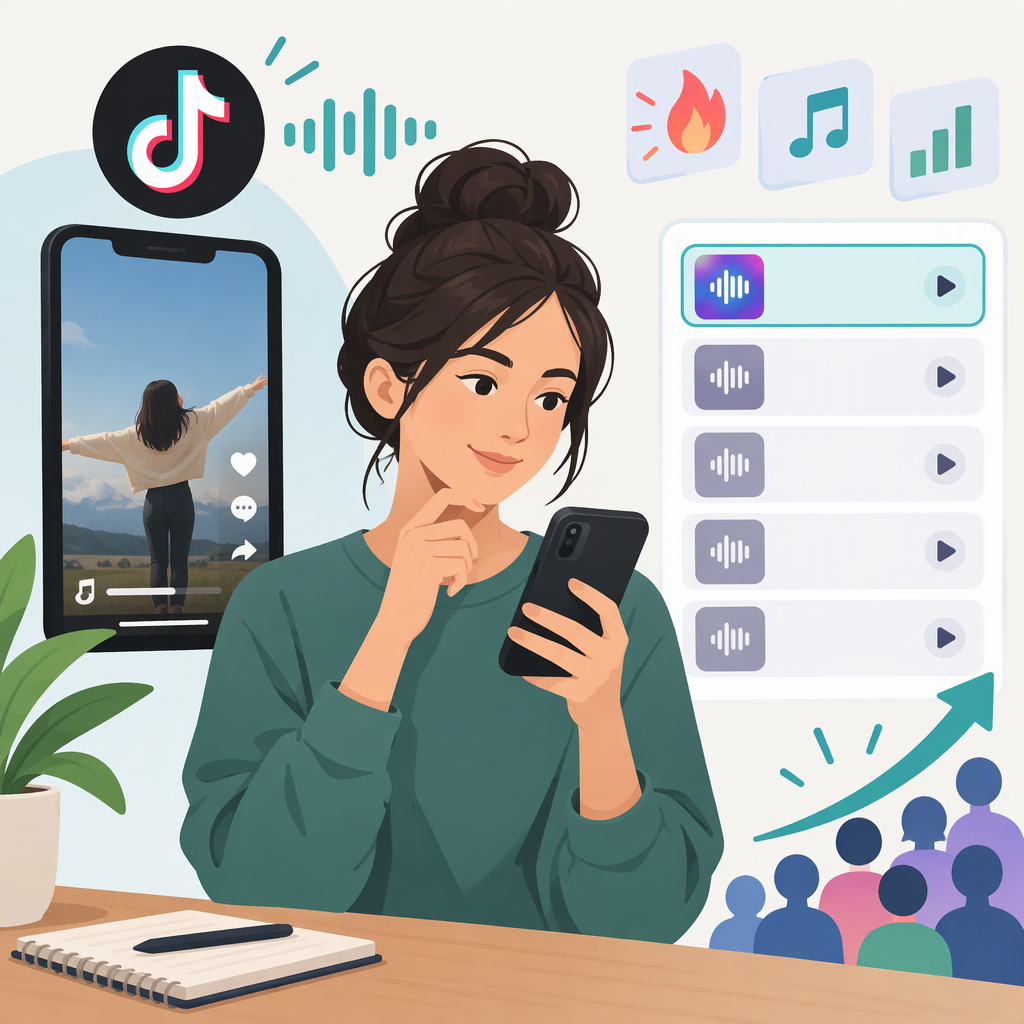
How to Choose a TikTok Sound That Could Help Your Video Reach More People
A sound can give you a useful starting point for a TikTok video, but choosing a popular one does not guarantee that more people will see it. Start with the video you want to make: choose audio that fits its subject, audience, and hook, then give viewers a reason to watch even if they do not recognize the sound.
This guide focuses first on choosing an existing sound. If your goal is to get other people to use your original audio, the approach is different: make the audio clear and build a video idea that someone else could easily adapt.
How to Choose a Sound for Your TikTok
Use these questions to compare candidate sounds before you build a video around one:
- Does it fit the idea? The sound should feel connected to the subject, mood, or action—not added just because it is popular.
- Will the intended audience understand the connection? Consider whether the audio helps set up the joke, reveal, mood, or story for the people you want to reach.
- Can it support a clear opening and payoff? Look for a moment in the sound that gives you a natural place to begin, change the visuals, or land the point.
- Is it relevant to this video now? If you are considering a sound because it seems timely, make sure its context actually suits your post. Do not assume that using a current trend automatically improves reach.
- Can you use it for this post? Before publishing, confirm that the sound is available and permitted for your account and the purpose of the post in TikTok’s current experience. Do not assume every sound is suitable for every use.
A quick way to make the choice is to rate each candidate from 0 to 2 on the first three questions: 0 means “not really,” 1 means “partly,” and 2 means “clearly.” This is just a personal planning aid, not a TikTok score or a prediction of performance. If a sound scores poorly on fit or on the opening-and-payoff question, look for another—even if it seems widely recognized.
Familiarity or Distinctive Fit?
A familiar sound may make the idea easier for some viewers to recognize. A less familiar sound may fit your particular concept better or help give it a more individual feel. Neither is automatically the better choice: prioritize whether the sound makes sense for the video you can actually create. Popularity alone is not evidence that a sound will help your specific post reach more people.
Hypothetical example: Suppose you are making a short video about packing for a rainy commute. One candidate sound is familiar but has no natural connection to the visuals. Another has a rhythm that fits the sequence of opening an umbrella, checking a bag, and heading out. If the second sound gives you a clearer opening and a satisfying ending, it may be the more coherent creative choice—even if it is less recognizable. That is a creative judgment, not a tested prediction about reach.
Make the Video Work with the Sound
Once you choose a candidate, plan the video around what a viewer sees and hears:
- Choose the first visual before editing. Decide what the viewer sees immediately and how it relates to the sound.
- Give the audio a job. It might establish a mood, mark a change, or help deliver a punchline. If it does none of those things, reconsider whether it belongs in the video.
- Match the action to the moment. Place the relevant visual change or reveal where it makes sense with the audio. There is no universal timing formula implied here; use the sound to serve this particular idea.
- Keep the payoff understandable without recognition. A viewer who has never heard the sound should still be able to follow the video and understand why it is worth watching.
- Check the finished post. Listen for audio that is hard to hear or that distracts from what is happening. Make sure the final edit still communicates the idea clearly.
For example, if the video is a before-and-after room reset, you could show the untidy room first, use a change in the audio as a cue for the transition, and end on the finished space. This is an illustrative structure, not a proven formula or ideal edit.
If You Want Your Own Original Sound to Spread
Promoting original audio is not the same as selecting an existing sound. You are asking the audio itself—and the video idea attached to it—to be memorable and usable by someone else. Consider making the key spoken line, melody, or sound effect easy to hear and giving it a clear moment another creator could reinterpret.
A useful planning question is: Could someone make a different video using this same audio and still have the idea make sense? If the answer is no, the audio may be too tied to your specific visuals. That does not mean others will reuse it; it simply helps you assess whether the concept is adaptable.
Before posting, check TikTok’s current audio attribution, reuse, and availability details for your account and intended post. Those details are not established here, so do not rely on assumptions about what can be reused or for what purpose.
Review Results and Adjust the Next Post
A video’s performance cannot show by itself that the sound caused the result. The idea, execution, audience, and timing may also have mattered.
Use a simple comparison loop:
- Compare the post with your own reasonably similar posts, rather than with an unrelated creator’s result or an assumed universal benchmark.
- Use only measures that are actually available to you in your current account context. Do not assume that a sound-level or reuse measure is available.
- Note what differed: the sound, the opening visual, the subject, or the way the video delivered its payoff.
- In a later post, change one creative element where practical. That makes the comparison easier to interpret, though it still does not prove that one change caused a different result.
- Keep the sound-selection criteria that helped the video feel coherent; reconsider choices that made the idea harder to understand.
Avoid declaring a sound a success or failure from one post. Treat each comparison as a clue for your next creative decision, not a guarantee about what will happen next.
Quick Sound-Selection Checklist
Before you post, ask:
- Does this sound fit the video’s subject and intended audience?
- Does it help create a clear opening, visual idea, or payoff?
- Would the video still make sense to someone who does not recognize the sound?
- Am I choosing it for a real creative reason, rather than assuming popularity guarantees reach?
- Have I confirmed that I can use this sound for this account and post purpose?
- If I review the result, will I compare it with relevant posts and avoid crediting the sound alone?
The most useful sound is not necessarily the most popular one. Choose the audio that helps you make a clear, relevant video—and treat reach as uncertain.