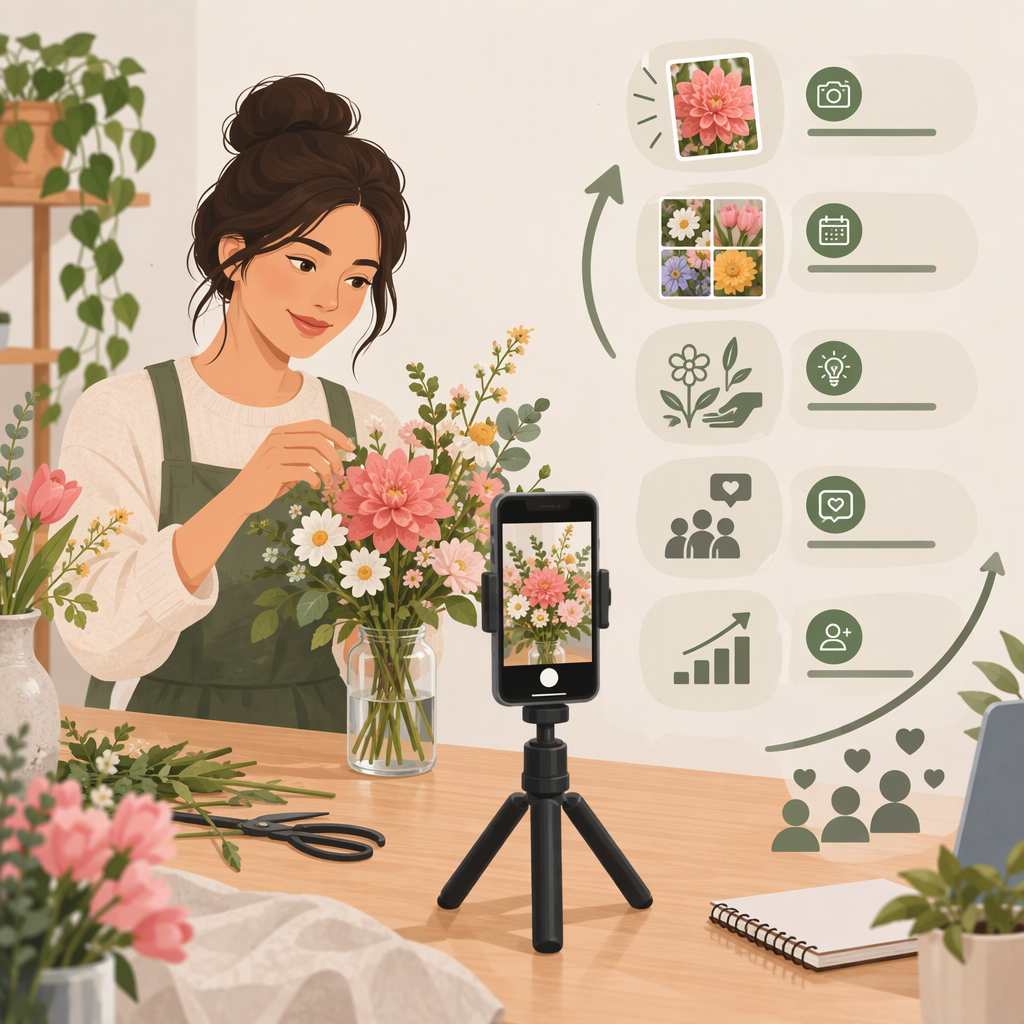
How to Grow a Flower Instagram Audience: A Practical Guide
First, What Does “Grow Flowers in Instagram” Mean?
This guide takes it to mean growing an Instagram audience for flower or nature content, not cultivating flowers and sharing them online. If you meant gardening advice, this is the wrong guide.
To build a relevant audience, make your account’s subject easy to understand, share useful or appealing flower content consistently enough to learn what resonates, and review the results before deciding what to change. There’s no reliable formula that guarantees a particular number of followers or a timeline for growth.
1. Give People a Clear Reason to Follow
Decide who you want your posts to help or interest. For example, your account might focus on growing cut flowers in a small garden, identifying local wildflowers, or photographing seasonal blooms.
Use that focus to shape your profile:
- Name and bio: Say what people can expect, in plain language. Add a location or growing conditions if they’re important to your subject.
- Profile image: Choose an image that remains recognizable when displayed small.
- Recent posts: Make the subject apparent from your latest content, not just your bio.
These are practical editorial suggestions, not a promise about how Instagram will distribute your posts. A useful test: if someone lands on your profile, can they quickly tell what you share and whether it’s for them?
2. Plan Posts Around Your Audience’s Interests
Start with a short list of recurring themes rather than trying to cover every flower topic. A flower or nature creator might try:
- A seed-to-bloom update, including what changed since the last post.
- A close-up with the flower’s name and a detail viewers might otherwise miss.
- A seasonal garden or local-flower observation.
- A short, clearly explained growing lesson based on your own knowledge.
- A photo sequence showing a process, such as arranging a bouquet.
These are illustrative ideas, not tested growth tactics. Choose subjects you can explain accurately and return to over time. Captions can add context the image alone may not provide—for instance, the variety, season, or growing conditions. Invite a genuine response with a specific question when it fits; don’t ask for engagement just for its own sake.
A simple planning routine is to choose a few topics for the coming week, make posts that fit those topics, and note what each post is meant to offer. The routine matters less than whether it helps you publish relevant work and learn from it.
3. Treat Discovery as an Opportunity, Not a Guarantee
Instagram says its Best Practices education section in the Professional Dashboard covers areas including creation, engagement, reach, and guidelines, with general and personalized tips for creators. Use the guidance available in your own account as a platform-specific reference; don’t assume a particular format, posting frequency, hashtag, or sound will produce reach. (about.fb.com)
Make posts understandable to people who don’t already know your account: identify the flower or topic where useful, add relevant context, and keep each post focused. You can also take part in relevant flower or gardening conversations and interact thoughtfully with creators and viewers in that community. Those are general audience-building practices, not claims about Instagram’s ranking system.
4. Review Results and Choose One Next Step
If insights are available for your account, compare a small number of posts that served similar purposes. Instagram’s help information describes account- and content-level insights, including measures such as views, interactions, and new followers; the metrics and dashboard options available to you may vary. (meta.com)
Try this modest review loop:
- Choose a consistent period that gives you enough posts to compare. There’s no universally correct review window.
- Compare similar content—for example, several flower-identification posts rather than a flower-identification post against an unrelated personal update.
- Look for patterns, not proof. Did viewers respond differently to close-ups, growing updates, or seasonal tips? A small set of posts can suggest a question to test, but it can’t establish that one format caused an outcome.
- Make one reasonable adjustment. You might clarify captions, try a different subject, or present the same kind of information in a different way. Then observe what happens before making another change.
Don’t treat a single post or a follower count as a complete verdict. A useful outcome may be finding that a particular topic attracts the people you hoped to reach, even if growth is gradual.
A Simple Starting Plan
- Write one sentence describing who the account is for and what it offers.
- Pick two or three flower or nature themes you can cover accurately.
- Create a small batch of posts that make those themes clear.
- Review the insights available to you, if any, and note one pattern to investigate.
- Adjust one element and keep learning; don’t assume the result is guaranteed.
If you meant how to grow flowers and document them on Instagram, start with flower-growing guidance suited to your plant and local conditions; this article is about growing an audience for flower content.