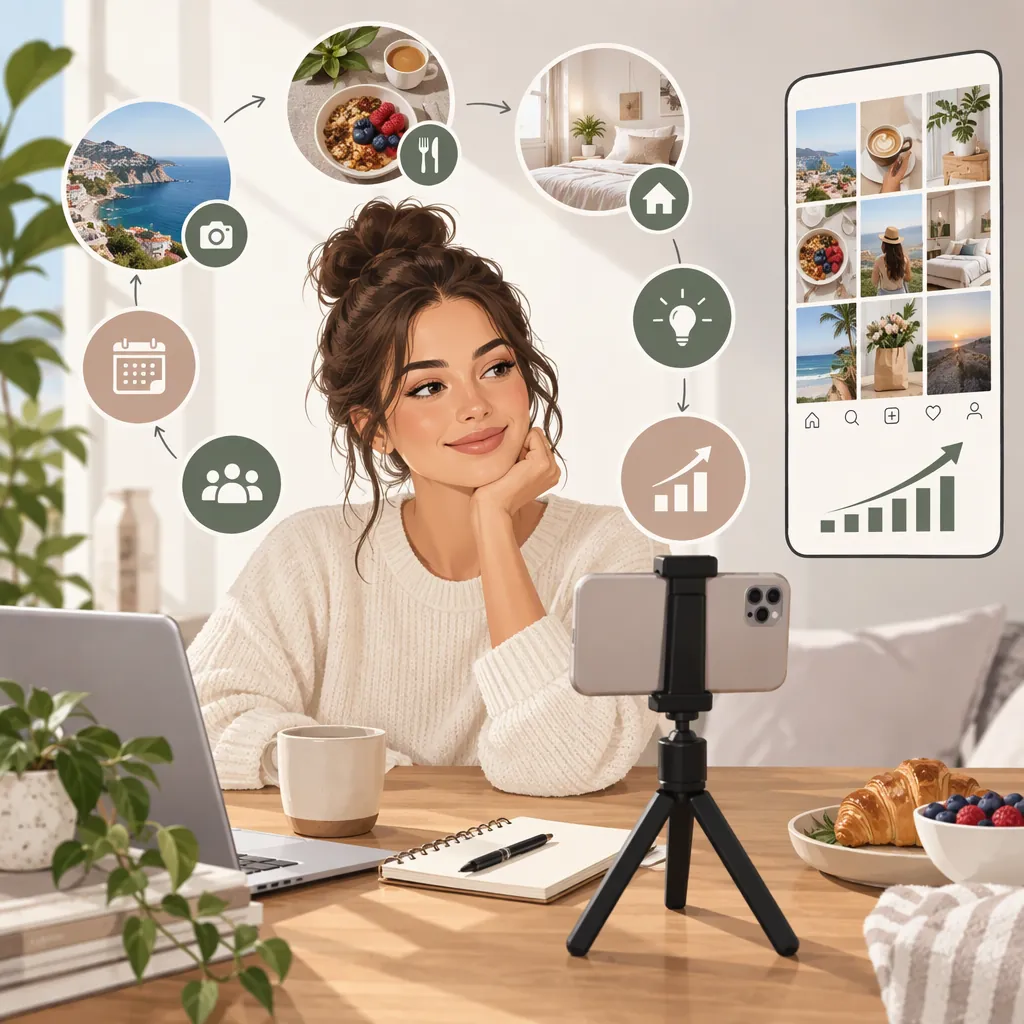
How to Grow a Lifestyle Instagram with a Clear Focus
To grow a lifestyle Instagram, choose a specific audience, give your everyday content a recognizable purpose, clarify your profile, and test repeatable ideas on a schedule you can maintain. Reply thoughtfully to your audience and review saves, shares, and follows to decide what to try next. These practices reflect creator suggestions in the supplied Instagram collection; they are not a guaranteed growth formula or official ranking guidance. [c1]
Choose an Audience, Not Just a Lifestyle
Start by answering: Whose everyday life is this account meant to help, reflect, or inspire?
The supplied creator collection includes advice to pick one audience group and give people a clear reason to follow. Use that as a planning principle rather than treating “lifestyle” as a complete niche. [c1]
For example, you could build around:
- Low-cost routines for people settling into their first apartment.
- Realistic meals, outfits, and downtime for busy office workers.
- Small-space living for people who enjoy practical home projects.
These are illustrative directions, not proven growth niches. Choose one that fits what you can genuinely document.
You do not have to restrict yourself to a single subject. Instead, connect your subjects through the same audience: cooking, home organization, and weekend outings can all fit an account about affordable everyday living.
Audience and Content Focus Worksheet
Complete these sentences before planning posts:

My account is for: ______.
Their everyday interest or challenge is: ______.
I will share three recurring themes: ______, ______, and ______.
The common thread across those themes is: ______.
I will keep these parts of my life private: ______.
Make Your Profile Match Your Content
The reference includes creator advice to make a profile clear and give visitors a reason to follow. [c1] Apply that by describing what you actually publish, rather than promising a vague “dream lifestyle.”
A possible bio for the first-apartment example is:
First-apartment living on a practical budget. Simple meals, small-space resets, and affordable weekend ideas.
Treat this as sample wording, not a claim about an existing account.
Review your recent posts alongside the bio. If your profile promises practical home ideas but nearly every post is an unrelated outing, either revise the promise or plan content that supports it. Keep any qualifications, partnerships, or achievements accurate; do not add credibility you cannot substantiate.
Turn Everyday Moments into Repeatable Ideas
The reference contains suggestions to make useful or relatable content and improve ideas that have already attracted a response. [c1] For a lifestyle account, try giving each post one clear purpose rather than merely recording an activity.
For example:
| Everyday Moment | Possible Post Angle | Repeatable Series |
|---|---|---|
| Making dinner | Explain a meal that uses what is already in the kitchen | Use-What-You-Have Dinners |
| Tidying a room | Show one small change and explain the trade-off | Small-Space Resets |
| Planning a weekend | Share how you choose between cost, travel, and downtime | Realistic Weekend Plans |
These are proposed content exercises, not formats with verified performance advantages.
Make the opening specific: “Three changes I would make to this tiny entryway” communicates more than “Come organize with me.” Then deliver what the opening promises. Avoid overstating the result just to attract attention.
When studying other creators, note their topic, opening, and structure. Develop your own example rather than copying their wording, footage, or personal story.
Single-Post Planning Card
Audience: ______.
Everyday moment: ______.
One useful or relatable point: ______.
Opening sentence: ______.
Scenes or images needed: ______.
What the viewer should understand by the end: ______.
A genuine question, if appropriate: ______.
Use a Sustainable Schedule and Genuine Conversation
Do not treat a demanding posting schedule as a requirement. The supplied collection contains conflicting creator suggestions: one recommends two Reels daily, while another says posting every day is unnecessary. It does not establish an optimal frequency for lifestyle accounts. [c1]
Choose a starting schedule based on your available time. For example, test two posts per week for four weeks. This is a planning option, not an evidence-backed growth threshold. Allow time for filming, editing, writing, and responding—not just publishing.
The collection also recommends replying to comments and messages. [c1] Keep that interaction meaningful:
- Answer questions about what you shared.
- Ask a relevant follow-up when you genuinely want to understand someone's experience.
- Record recurring questions as possible future topics without exposing private messages.
- Set boundaries around personal details and conversations you do not want to continue.
Avoid using generic comments or unsolicited promotional messages as a substitute for conversation.
Review Responses and Adjust One Thing at a Time
The reference includes advice to review analytics weekly, with attention to saves, shares, and follows. [c1] Use those as observation points where the information is available to you—not as proof that a particular tactic caused growth.
For a simple four-week experiment:
- Week One: Publish across your chosen themes and record the topic, format, and time spent creating each post.
- Week Two: Repeat a promising topic with a different everyday example.
- Week Three: Change one element, such as the opening or explanation, while keeping the topic similar.
- Week Four: Compare responses and production effort. Choose what to continue, revise, or stop.
Record available reach, saves, shares, follows, and substantive questions. Use the same observation window for each post where practical. Mark unavailable figures as unavailable rather than estimating them.
Keep two questions separate: Did this content reach people? and Did people have a reason to stay interested in the account? A post can attract attention without clearly matching your broader focus.
A small test cannot isolate every influence on performance. Treat results as clues for your next experiment, not a prediction of future follower growth.
Weekly Content Review Template
| Post | Theme | Format | Creation Time | Available Reach | Saves | Shares | Available Follows | Questions or Feedback | Next Test |
| --- | --- | --- | --- | --- | --- | --- | --- | --- | --- |
| Enter post | Enter theme | Enter format | Enter time | Record or mark unavailable | Record or mark unavailable | Record or mark unavailable | Record or mark unavailable | Summarize without private details | Change one element |

Weekly decision: Continue ______. Revise ______. Stop ______.
Reason: ______.
Uncertainty or missing information: ______.
FAQ
Can I Cover Several Lifestyle Topics?
Yes, as a content-planning choice. Connect those topics through one audience and a recognizable purpose. For example, meals, home projects, and outings could all serve people interested in affordable everyday living. This adapts the reference's audience-focus advice; it does not establish that multi-topic accounts grow faster. [c1]
Do I Need to Post Every Day?
The supplied reference does not establish a daily posting requirement. It contains both high-frequency advice and a creator's suggestion that daily posting is unnecessary. Start with a schedule you can maintain and evaluate your own results rather than treating either suggestion as a universal rule. [c1]
How Quickly Will My Lifestyle Instagram Grow?
There is no supported timeline for your account in the supplied material. The reference includes individual creator anecdotes and advice, not evidence that predicts a particular account's results. Use a short experiment to learn which topics and production habits are worth continuing, without setting a guaranteed follower target. [c1]