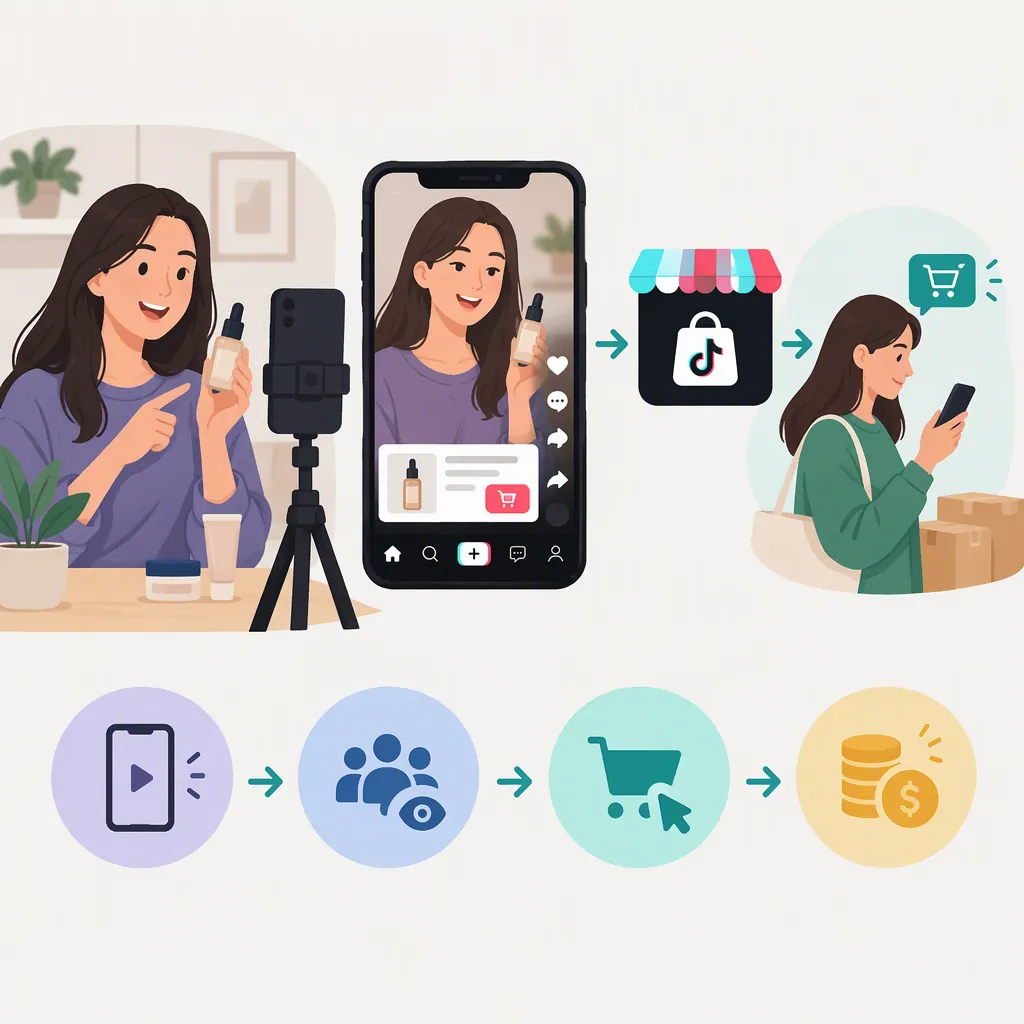
TikTok Shop Affiliate Marketing: Concepts and Practice
TikTok Shop affiliate marketing connects sellers with creators who promote products and earn commissions on attributed sales. The supplied guide describes product promotion through shoppable videos, livestreams, and product showcases. For practical planning, distinguish the seller’s product and commission responsibilities from the creator’s content responsibilities, and verify current eligibility and payment rules before participating. [ref_1]
What TikTok Shop Affiliate Marketing Means
The search term tiktokshopaffiliate generally refers to TikTok Shop affiliate marketing: a commission-based arrangement between sellers and creators. The supplied guide describes TikTok Shop as an in-app shopping service and its affiliate program as a way for creators to promote sellers’ products in exchange for commissions on sales they drive. [ref_1]
The roles are distinct:
- Seller: Lists products, establishes commission offers, and provides product information and collaboration terms.
- Creator or affiliate: Produces content featuring products and participates under the applicable commission terms.
- Shopper: Encounters product content and can access shopping features within TikTok.
These roles and features are described in the reference, but that source does not establish the current rules for every account or market. [ref_1]
Understand Collaboration and Commission Terms
The reference distinguishes broadly available product collaborations from targeted collaborations with selected creators. It calls these open and targeted plans, and also describes a shop-wide commission approach. Treat those labels as the source’s terminology rather than a verified inventory of today’s interface options. [ref_1]
The guide recommends clarifying commission structure, payment terms, content expectations, exclusivity, and partnership duration. [ref_1] A useful planning principle is to document the offer before creating content or distributing products.
Questions to resolve include:
- Which products are included, and what commission applies to each?
- What qualifies as an attributed, payable sale?
- How are canceled or returned orders treated?
- When does a commission become payable?
- Are samples, content deliverables, or usage permissions part of a separate agreement?
These questions are a due-diligence checklist, not statements of TikTok’s current policy. The supplied reference does not establish a current attribution window, settlement schedule, or return-adjustment rule.
A Practical Workflow for Sellers and Creators
The source’s seller workflow includes listing products, choosing a collaboration approach, identifying suitable creators, agreeing on terms, and supplying product resources. It recommends evaluating audience fit and content quality rather than relying only on follower count. [ref_1]
Use the following as a planning workflow, not as a current screen-by-screen setup tutorial:
- Verify access. Check the account’s current market, eligibility, and available affiliate features. Do not assume that a seller account and a creator account have identical requirements.
- Review the product. Gather reliable specifications, intended uses, and limitations. Mark unanswered questions before drafting content.
- Record the offer. Save the product, commission terms, date reviewed, and any separate collaboration obligations.
- Plan the content. Address a relevant shopper question. Distinguish documented product facts from personal observations, and do not imply firsthand use without it.
- Make compensation clear. As an editorial safeguard, plainly explain the commission relationship and check applicable disclosure requirements separately.
- Review outcomes. Compare content activity with the sales and commission information available to the account, while keeping pending amounts separate from confirmed payments.
The reference supports the general seller-planning approach. The verification and editorial safeguards above are recommendations, not a claim that the source supplies complete platform or legal guidance.
Affiliate Offer Review Template
Product and listing identifier: __________
Seller or creator role: __________
Market and eligibility checked on: __________
Commission terms and date reviewed: __________
Attribution and settlement questions: __________
Cancellation or return questions: __________
Sample or separate payment arrangement: __________
Content deliverables and usage permissions: __________
Verified product facts: __________
Claims to avoid or investigate: __________
Compensation disclosure wording: __________
Review date and unresolved issues: __________
Measure Results Without Assuming Earnings
The reference says TikTok Shop provides metrics and tools for monitoring affiliate performance. It also recommends establishing performance expectations between sellers and creators. [ref_1]
For a practical review, keep different measures separate:
- Content activity: What was published, for which product, and when?
- Reported sales: Which orders does the account report as attributed?
- Commission status: Which amounts are pending, confirmed, or paid?
- Costs and effort: What time, sample costs, production expenses, or other separately agreed costs were involved?
Use the measures actually available in the account; this list does not promise particular dashboard fields. Do not treat views as proof of sales or a displayed commission estimate as money already received. The supplied evidence is insufficient to establish typical earnings, likely profitability, or a guaranteed result.
Source Limits and Current-Policy Checks
This article relies on one supplied third-party guide, titled How to Set Up a TikTok Shop Affiliate Program, dated September 12, 2024. The guide includes commercial promotion, statistics, and customer examples; those results are not used here as evidence of expected performance. It also notes that seller verification requirements and eligibility vary by country and TikTok Shop policy. [ref_1]
No official TikTok policy reference was supplied. Accordingly, this article does not assert current follower thresholds, age requirements, supported markets, fees, commission rates, attribution windows, or payout timing. Verify those details against the current rules available for the relevant account and market before making operational or financial commitments.
FAQ
Is a TikTok Shop Affiliate the Same as a Seller?
They are different roles in the arrangement described by the source. Sellers list products and offer commissions; creators promote products and earn commissions on attributed sales. Do not infer identical account requirements from their participation in the same shopping system. [ref_1]
What Commission Rate Do TikTok Shop Affiliates Receive?
The supplied guide describes sellers setting commission offers rather than one universal rate. Review the terms for the specific product and collaboration. This article does not establish a current minimum, maximum, or typical rate. [ref_1]
What Are the Current Eligibility Requirements?
The supplied reference is not enough to confirm current creator eligibility or a follower threshold. It explicitly cautions that seller eligibility and verification requirements vary by country and policy. Check the requirements for the relevant account and market rather than relying on a general setup guide. [ref_1]
How Do Open and Targeted Collaborations Differ?
The guide describes open plans as making products available more broadly to creators and targeted plans as selecting particular creators for selected products. Its terminology and interface descriptions should be checked against the current account experience. [ref_1]