Ppc Affiliate Programs: How Pay per Click Works
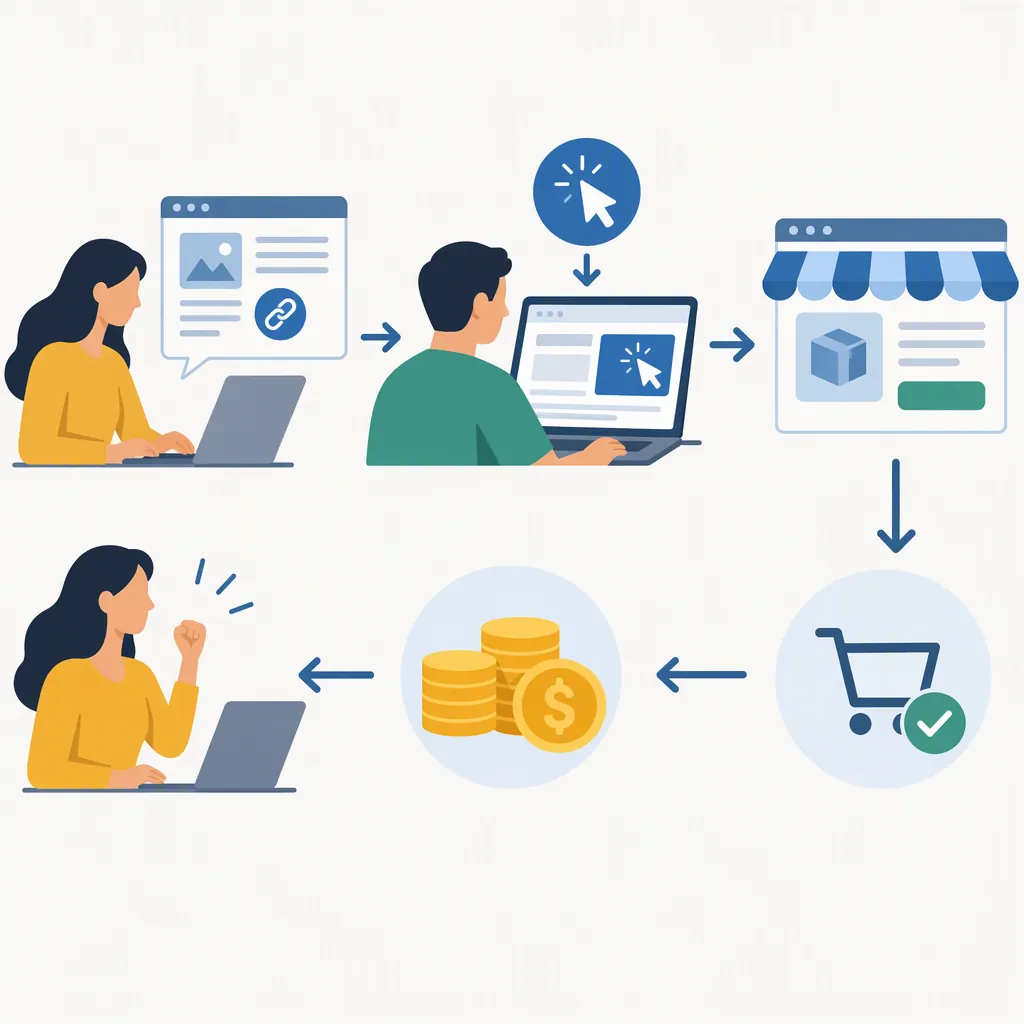
A PPC affiliate program pays a publisher for clicks on ads or links, rather than requiring a purchase. This differs from using PPC advertising to promote affiliate offers: in that arrangement, the affiliate pays for traffic and earns according to the offer’s commission rules. Program lists sometimes mix click-based, impression-based, and conversion-based options, so the payable event matters more than the “PPC affiliate” label. [c1] [c2] [c3]
Two Meanings of Ppc Affiliate
The term PPC affiliate can describe two different money flows.
- Earning from clicks: A publisher places ads or monetized links in its content. The advertiser or network pays for clicks under the program’s terms. Voluum describes this publisher monetization model in its guide. [c1]
- Paying for clicks: An affiliate buys advertising to send visitors toward an affiliate offer or landing page. The affiliate incurs advertising costs and seeks commissions from qualifying outcomes, such as sales or sign-ups. Post Affiliate Pro describes this acquisition strategy. [c3]
These arrangements should not be treated as interchangeable. A sale-based affiliate offer does not become a pay-per-click commission program simply because the affiliate uses paid search to promote it. Before comparing programs, identify who pays for the click and which event creates the publisher’s earnings.
Money-Flow Worksheet
For each arrangement, record:
- Who pays the advertising cost?
- Who receives the publisher payment?
- Which event earns compensation: click, impression, lead, sale, or another action?
- Is the affiliate buying traffic, monetizing existing traffic, or doing both?
- Which document defines the payable event?

If the payable event is not documented, mark the payment model as unconfirmed.
Identify What Actually Triggers Payment
The supplied guides discuss several compensation models under the broad PPC affiliate heading. Their own descriptions show why a program name or list placement is not enough to establish how earnings work. [c1] [c2]
| Model | Payment Basis | Practical Distinction |
|---|---|---|
| Click-based | Clicks on ads or monetized links | A purchase is not the stated payment trigger. |
| Impression-based | Ad views, commonly expressed per thousand impressions | A click is not the stated payment trigger. |
| Lead-based | A qualifying lead | A visit alone does not establish a lead. |
| Sale-based | A qualifying purchase | A click alone does not establish a sale. |
| Action-based | A specified action | The program must define the qualifying action. |
The wecantrack guide explicitly distinguishes impression, lead, sale, call, and install payments from click-based commissions. Voluum also includes multiple payment models in its program listings. [c1] [c2]
Revenue share describes how proceeds are divided, not necessarily what event earns them. A revenue-share percentage therefore needs to be read alongside the underlying payment model. Likewise, revenue per thousand impressions is a reporting measure, not proof of click-based compensation. [c1]
Payment-Model Record
Program name:
Payable event:
Definition of a qualifying event:
Fixed payment or revenue share:
Reporting metric and denominator:
Source document and date checked:
Unresolved questions:

Keep an unconfirmed field labeled “Unconfirmed” rather than inferring it from a program roundup.
Compare Eligibility, Payouts, and Ad Fit
Voluum identifies traffic requirements, ad formats, payment thresholds, payment methods, and payment timing as important comparison factors. Post Affiliate Pro also highlights content quality, compensation details, and audience relevance. [c1] [c3]
A useful comparison separates three questions:
- Is the traffic eligible? Record minimum traffic requirements, accepted traffic sources, audience geography, and content restrictions. A low traffic threshold does not answer every eligibility question. [c1]
- When can earnings be received? Record the minimum payout, payment schedule, supported methods, and any applicable fees. Accumulating reported earnings and receiving a payment are separate milestones. [c1]
- Does the placement suit the content? Consider relevance, placement control, and how intrusive the format may be. Voluum cautions against overwhelming a website with ads and notes user-experience concerns with some formats. [c1]
A neutral comparison should not rank programs solely by an advertised rate. Payment conditions and audience fit can materially change whether that rate is useful for a particular publishing setup.
Program Comparison Checklist
- [ ] Payable event documented
- [ ] Traffic minimum and measurement unit documented
- [ ] Accepted traffic sources documented
- [ ] Content and geographic restrictions documented
- [ ] Available ad formats recorded
- [ ] Placement controls reviewed
- [ ] Minimum payout recorded
- [ ] Payment schedule and methods recorded
- [ ] Fees and currency conditions recorded
- [ ] Terms checked against current program documentation
- [ ] Unknown or conflicting details clearly flagged
Estimate Earnings Without Assuming a Rate
There is no universal PPC affiliate payment rate; Post Affiliate Pro notes that compensation varies by program and advertiser. Voluum also cautions that payout terms can change and that fees may depend on location, currency, or payment method. [c1] [c3]
For a documented fixed-rate click program, a basic planning calculation is:
Estimated click revenue = payable clicks × publisher payment per click.
Use the publisher’s payment rate—not an advertiser’s acquisition cost—and do not assume that every observed click is payable. For variable-rate or revenue-share arrangements, the fixed-rate calculation is not sufficient.
If the affiliate is buying PPC traffic, evaluate a different calculation:
Campaign contribution = affiliate revenue − advertising spend − other campaign costs.
Post Affiliate Pro emphasizes balancing PPC budgets against potential commission earnings. A campaign can produce commissions without covering its advertising costs. [c3]
Earnings Calculation Template
Click-paying arrangement:
Payable clicks = C
Documented publisher payment per click = R
Estimated click revenue = C × R
Assumptions and exclusions = record separately

Paid-traffic affiliate campaign:
Affiliate revenue = A
Advertising spend = S
Other campaign costs = O
Campaign contribution = A − S − O

These are planning calculations, not guaranteed earnings or a complete business profit calculation.
Treat Program Roundups as Starting Points
The evidence supplied for this article consists of commercial educational guides, not individual program contracts or payment policies. Their lists are useful for understanding terminology and comparison criteria, but they do not establish current eligibility or payouts for every program.
There are visible disagreements. For example, the Voluum and wecantrack guides give different entry requirements for Mediavine and Raptive. Both also include arrangements that are not strictly click-paying. This article therefore does not reproduce those thresholds as verified current requirements or present a ranked list of programs. [c1] [c2]
For a specific program, the unresolved questions are its current payable event, eligibility rules, and payout conditions. A dated roundup alone is not sufficient evidence to settle those questions.
FAQ
Does a Ppc Affiliate Program Require a Purchase?
In a genuinely click-based program, the click is the payment trigger rather than a purchase. However, the supplied roundups include sale-based and other compensation models, so a program’s inclusion in a PPC list does not establish that it pays for clicks. [c1] [c2]
Can a Small Website Qualify?
Some programs described in the supplied guides have low or no minimum traffic requirements. Eligibility can still depend on content, traffic sources, and other conditions. The supplied roundups do not establish current acceptance rules for a particular website. [c1] [c3]
Is Buying Ppc Ads the Same as Earning per Click?
No. Buying PPC ads means paying for traffic. Earning through a click-based publisher program means receiving compensation for clicks. An affiliate buying traffic may instead earn commissions from sales or sign-ups and must compare those earnings with advertising costs. [c1] [c3]
Which Ppc Affiliate Program Is Best?
The provided evidence does not support a universal winner. A meaningful comparison depends on the payable event, audience relevance, traffic eligibility, ad formats, and payout conditions. Conflicting requirements in the supplied guides also limit any current program ranking. [c1] [c2] [c3]