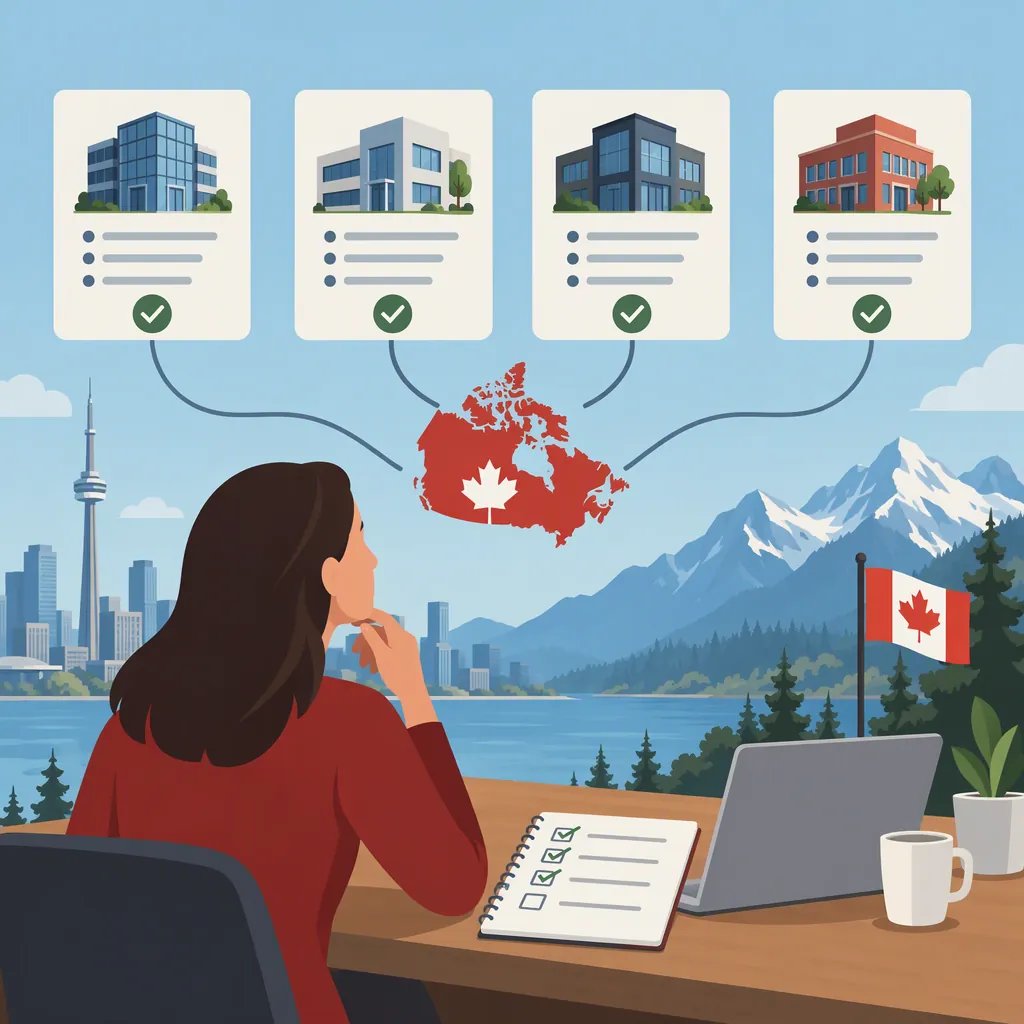
How to Compare Affiliate Companies in Canada
To choose an affiliate company for Canada, first decide whether you need an agency to manage a brand’s program, a network to connect with partners, or a merchant program to join as a creator. Shopify describes direct merchant programs and third-party networks, while Seven Square Media discusses agency management and Canadian localization. Compare candidates on audience fit, service responsibilities, tracking, reporting, total costs, and regional support—not directory position alone. The provided sources do not establish a single best provider or confirm current Canadian eligibility for every named option. [c3] [c2] [c1]
Identify the Type of Affiliate Partner You Need
The phrase “affiliate companies Canada” can describe different needs. Use these working categories before comparing names:
| Category | Role to Evaluate | Who Should Evaluate It? |
|---|---|---|
| Affiliate management agency | People and services for recruitment, partner communication, campaign planning, and program oversight | A brand seeking outside management |
| Affiliate network | Infrastructure connecting merchants and affiliates, with program administration functions | Brands seeking partners and publishers seeking programs |
| Affiliate software | Tools for running a program, with capabilities that may overlap with a network | A brand with staff available to manage operations |
| Merchant affiliate program | An arrangement under which publishers promote a merchant and earn commission on qualifying activity | Creators, bloggers, and other publishers |
Shopify explains that retailers can work directly with affiliates or use a third-party network. It also describes affiliates using tracked links to earn commissions on purchases. Seven Square Media discusses agency work such as recruitment and relationship management. These sources support separating operational help from the program a creator actually joins. [c3] [c2]
For a creator, the first comparison should therefore be between available merchant programs and their terms—not between agencies hired to manage brands.
Use Public Listings as Research Leads
The supplied references contain names worth distinguishing, but they do not provide a verified, like-for-like comparison.
- Directory-listed agencies: The topseos Canada affiliate marketing page includes DMA | Digital Marketing Agency, Arcane Marketing, BubbleUP Marketing, NexToronto, and other firms. Some entries are labeled “Canada Division,” while others show Canadian locations. These are directory descriptions, not independent confirmation of Canadian incorporation or an affiliate-specific service offering. [c1]
- Agency-published material: Seven Square Media describes itself as a Canadian affiliate management agency. Its article discusses localization, partner recruitment, reporting, and technology selection. This is the agency’s own account, not an independent evaluation of service quality. [c2]
- Networks discussed in a retail guide: Shopify’s guide names Awin, Rakuten Advertising, and CJ Affiliate. Their inclusion provides research leads; it does not establish current Canadian publisher eligibility, merchant acceptance, pricing, or suitability for a particular business. [c3]
Avoid treating these names as one ranked shortlist: an agency, a network, and a merchant program address different decisions. No recommendation or provider performance comparison is established by these three references.
Compare Scope, Tracking, and Costs
Turn general service descriptions into questions with documentable answers. The topseos evaluation framework covers network, implementation, monitoring, reporting, and optimization. Shopify also discusses recruitment, commission tracking, payout automation, integrations, and fraud detection as evaluation areas. These are useful comparison topics, not proof that a listed provider meets them. [c1] [c3]
For brands, separate agency fees, platform or network charges, affiliate commissions, and any additional production work. Compare proposals using the same expected activity and service scope. Do not rely on published fee examples as current quotations.
For creators, focus on Canadian eligibility, qualifying transactions, commission exclusions, attribution windows, payout currency, payment thresholds, and reversal rules. An advertised commission rate is not enough to understand the arrangement.
The worksheet below is a proposed evaluation tool, not a factual scorecard for any named company.
Affiliate Provider Comparison Worksheet
Complete one copy per candidate. Mark missing information as “Unknown,” rather than assuming support.

Candidate and provider type:
Source document and date:
Canadian contracting entity or eligibility:
Target provinces and audience:
Recruitment and partner communication owner:
English/French content responsibilities:
Tracking method and attribution rules:
Treatment of consent-related tracking gaps:
Handling of returns, cancellations, and duplicate attribution:
Reporting fields and export access:
Brand: agency fees, platform charges, commissions, and extra work:
Creator: commission basis, exclusions, payout currency, threshold, and schedule:
Promotional restrictions and disclosure process:
Data access, retention, and deletion responsibilities:
Contract length, termination terms, and account ownership:
Unresolved questions:
Decision status: Suitable / Not Suitable / Needs Verification.
Assess Canadian Fit Without Assuming Compliance
A Canadian label does not answer every regional or operational question. Seven Square Media emphasizes localized content, English/French materials, regional differences, and Canadian shopping events in its discussion of market entry. Use those themes to ask how a candidate would support your actual audience, rather than accepting a generic promise of Canadian expertise. [c2]
Useful questions include:
- Which provinces and language audiences does the proposed plan cover?
- Who prepares and reviews French-language affiliate materials where needed?
- How will promotions reflect the merchant’s Canadian availability and purchasing experience?
- Who reviews affiliate content and addresses policy violations?
- How are privacy, electronic messaging, and disclosure responsibilities assigned?
Seven Square Media discusses PIPEDA, CASL, affiliate disclosures, and Quebec language considerations. However, the provided references contain no primary Canadian legal guidance. Shopify’s legal discussion also includes U.S. and other non-Canadian rules. Neither article should be treated as a complete Canadian compliance checklist. Requirements need separate verification for the activity and jurisdiction involved. [c2] [c3]
Make the Decision with Evidence Limits in View
Treat a directory position as a discovery aid, not a verdict. The topseos page publishes evaluation criteria and also contains invitations to apply for rankings and improve rankings. That context belongs in the assessment, but it does not by itself establish how any particular placement was determined. [c1]
Keep three evidence types separate:
- A public listing: Establishes that a source lists a company, not that its services fit your needs.
- A provider’s own explanation: Describes its stated approach, but is not an independent assessment.
- Written terms and a scoped proposal: Provide a basis for evaluating your specific arrangement, subject to further verification.
A practical decision rule is to defer selection when essential information remains unknown—especially eligibility, costs, tracking rules, service ownership, or termination terms. The references are sufficient for an initial research framework, but not for a verified “best affiliate companies in Canada” ranking.
FAQ
Do Creators Need an Affiliate Agency to Earn Commissions?
Not necessarily. Shopify describes creators, bloggers, and other publishers earning commissions through merchant affiliate programs. An agency is a different option: Seven Square Media discusses management services for brands. A creator should first evaluate programs that accept their location, audience, and promotional methods. [c3] [c2]
Does a Canada Directory Listing Prove a Company Is Canadian?
No. The topseos page mixes entries labeled “Canada Division” with entries showing Canadian locations. A directory entry alone does not establish incorporation, the contracting entity, or where the team performing the work is located. Those details remain verification questions. [c1]
Which Affiliate Network Is Best for Canada?
The provided sources do not establish one best network. Shopify discusses Awin, Rakuten Advertising, and CJ Affiliate, but its guide is not a verified Canada-specific comparison. Evaluate current eligibility, relevant programs or publishers, attribution rules, costs, integrations, and payment terms for your use case. [c3]