Amazon Affiliate Canada: How Amazon Associates Works
What “Amazon Affiliate Canada” Means
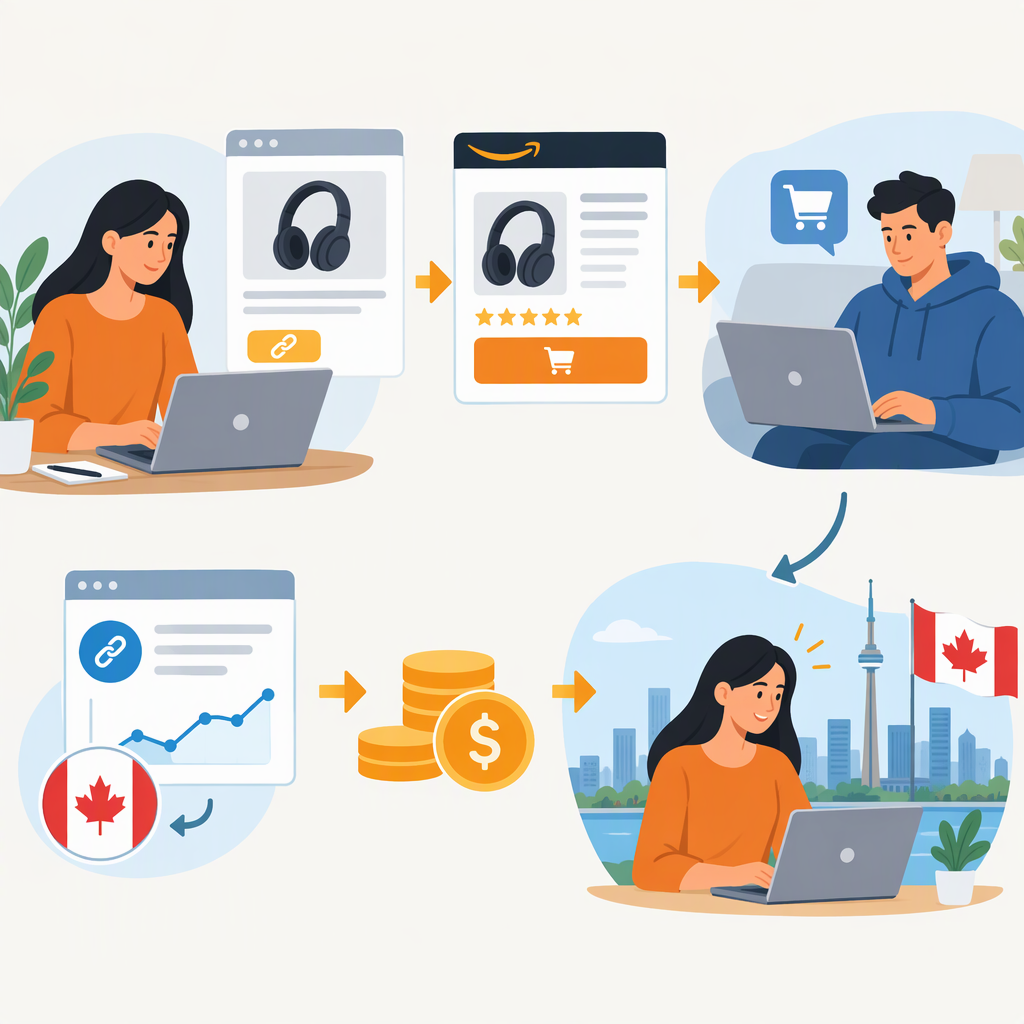
“Amazon affiliate Canada” usually refers to the Amazon.ca Associates Program, Amazon’s program for creators, publishers, and bloggers who share tracked links and may earn commissions from qualifying purchases. Amazon describes the process as signing up, sharing products using its linking tools, and earning from qualifying purchases. The official starting point is Amazon.ca Associates Central. (associates.amazon.ca)
This guide focuses on that Canadian program. If your audience shops in other countries, do not assume a Canadian link or account will earn commissions on every other Amazon marketplace. Check the applicable country program and its current linking and commission terms for the storefront you are sending readers to.
How to Check Eligibility and Apply
- Choose the site or social account you plan to use. Amazon’s program materials refer to websites, mobile apps, and social-network pages. Add the properties you intend to use to your application and keep that list accurate. Amazon reviews the sites submitted with the application. (associates.amazon.ca)
- Prepare original content before applying. Amazon says submitted sites need robust original content; its help page gives at least 10 posts as a rule of thumb, not as a guarantee of acceptance. The operating agreement also defines the kinds of sites and content covered by the program. (associates.amazon.ca)
- Apply through Amazon.ca Associates Central. Amazon says it reviews applications and approves them if they meet its criteria. Approval is not guaranteed. (associates.amazon.ca)
- After applying, meet the sales-review requirement. Amazon says an applicant must refer at least three qualifying sales within the first 180 days. Personal orders do not qualify. Amazon says it evaluates the application after that threshold is met. (associates.amazon.ca)
- Read the current agreement and program policies before publishing links. The agreement and incorporated policies govern which links and content are allowed, how purchases qualify, and what can earn a commission. (associates.amazon.ca)
Amazon’s landing page also points influencers with an established social-media following to its separate Influencer Program. Check that program’s own current criteria rather than assuming it has the same application route or rules as Associates. (associates.amazon.ca)
How Links, Commissions, and Payments Work
An Associate creates a tagged link using Amazon’s linking tools and places it on an eligible site. If a customer follows that link and makes a purchase or takes another qualifying action under the current program terms, the Associate may earn commission income. The agreement makes clear that the link format, qualifying-purchase rules, exclusions, and commission schedule all matter; a click alone does not guarantee earnings. (associates.amazon.ca)
Commission Rates Vary by Category
Amazon.ca’s published commission schedule lists different rates for different product categories. For example, the schedule returned for this research lists 4% for categories including Kitchen & Dining and 1% for Computers, Tablets & Components. It lists 0% for Amazon Gift Cards and Grocery & Gourmet Food. These are examples from the published schedule, not a promise that a particular item will qualify at that rate; Amazon’s category classification and current terms control. Check the live schedule before estimating income. (associates.amazon.ca)
Illustrative calculation, not an earnings forecast: if a purchase produces CAD $100 of qualifying revenue and the applicable rate is 4%, the simple calculation is CAD $4 before any adjustments or exclusions under the program terms. Actual commission depends on whether the purchase qualifies, how Amazon classifies it, and the current agreement. (associates.amazon.ca)
Amazon’s policies describe a time-limited purchase session after a customer clicks a Special Link, with additional conditions for when an order is placed and completed. The policy update page says changes effective April 14, 2026 added a requirement that qualifying products be shipped, streamed or downloaded, and paid for within 180 days of purchase. Because attribution and exclusions can be detailed, use the current Commission Income Statement rather than relying on a simplified “cookie window” summary. (associates.amazon.ca)
Payments: Timing and Thresholds
Amazon says commissions are paid monthly, approximately 60 days after the end of the month in which they were earned, provided the balance meets the applicable threshold and required tax information is on file. Its help pages list direct deposit, Amazon gift certificate, and cheque as payment methods. (associates.amazon.ca)
Check the threshold shown for your account and payment method before planning cash flow. Amazon.ca help pages surfaced for this guide show conflicting minimums: one says CAD $50 for direct deposit or gift certificate and CAD $100 for cheque, while other help pages state CAD $10 for direct deposit or gift certificate and CAD $100 for cheque. Because the public help material is inconsistent, this guide does not present one threshold as definitive. (associates.amazon.ca)
Disclose Affiliate Links Clearly
Amazon’s agreement requires Associates to clearly and prominently display this statement on their site or other authorized location: “As an Amazon Associate I earn from qualifying purchases.” Amazon’s help material also says affiliate disclosures should be clear and conspicuous near the relevant link or review; it gives examples such as “paid link,” “#ad,” or “#CommissionsEarned.” Check the agreement for how the required statement applies to your specific site or social account. (associates.amazon.ca)
Canadian guidance is also important. The Competition Bureau says influencers should disclose material connections, including commissions, and that disclosures should be prominent, easy to notice without expanding a post, and written in clear language. It cautions that simply linking to a brand or affiliate page is unlikely to be enough. For social content, consider how the disclosure appears in the format people actually see; some content may need both audio and visual disclosure. (competition-bureau.canada.ca)
A practical approach is to put a plain-language commission disclosure close to the recommendation or link, and include Amazon’s required Associate statement in the appropriate site or account location. A disclosure does not make an unsupported product claim acceptable: the Competition Bureau also advises that reviews and testimonials should reflect actual experience. (competition-bureau.canada.ca)
This is general educational information, not legal or tax advice. The Competition Bureau’s guidance describes its view of disclosure best practices; creators should consult authoritative guidance or a qualified professional for questions specific to their circumstances.
Before You Apply or Publish: A Short Checklist
- Confirm you are using the official Amazon.ca Associates Central route and the program terms for the marketplace you intend to link to. (associates.amazon.ca)
- Make sure the sites or social accounts you submit are accurate and contain original content; Amazon’s “10 posts” figure is a rule of thumb, not approval criteria by itself. (associates.amazon.ca)
- Plan for the three qualifying-sales review within 180 days; do not count your own orders. (associates.amazon.ca)
- Check the current commission schedule, qualifying-purchase rules, exclusions, and any recent policy changes before estimating commissions. (associates.amazon.ca)
- Confirm payment method, account details, tax information, timing, and the threshold displayed in your account. (associates.amazon.ca)
- Use clear disclosures for both Amazon’s program requirement and Canadian material-connection guidance. (associates.amazon.ca)