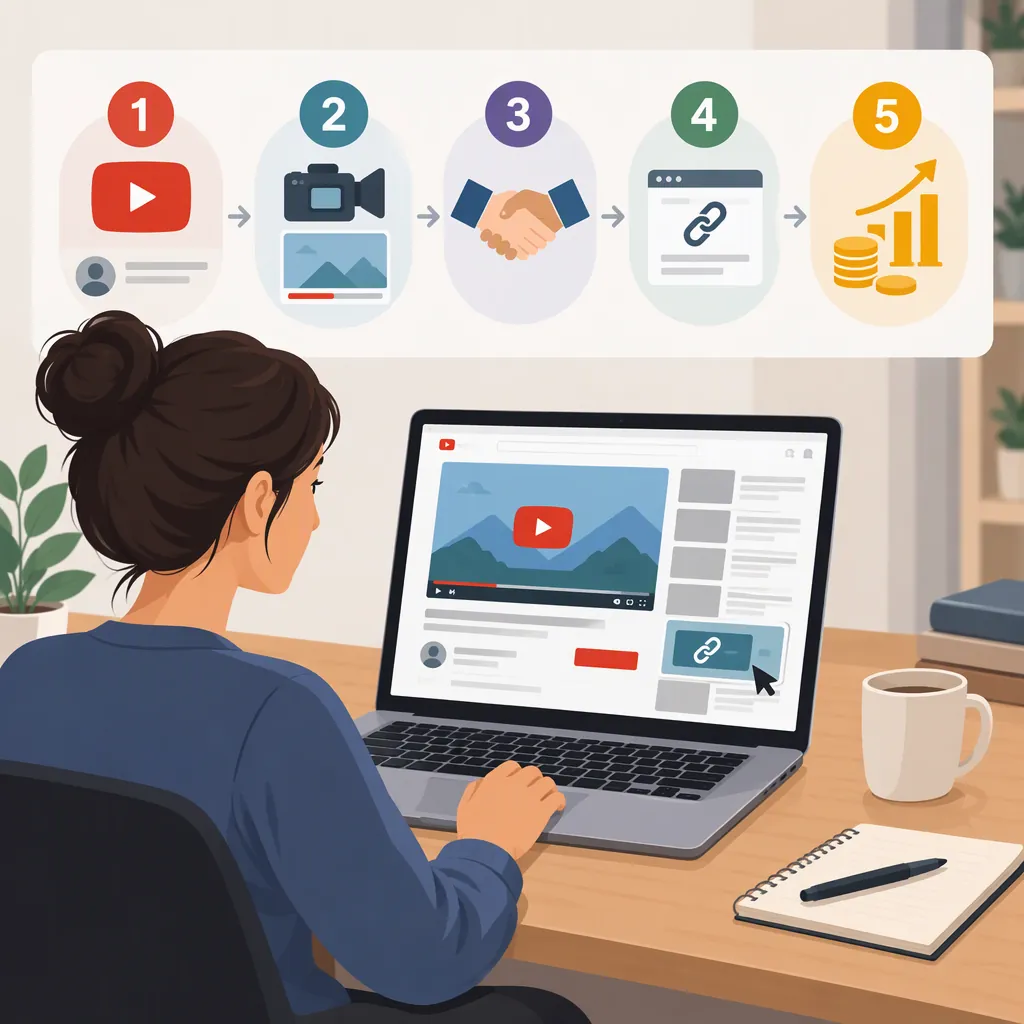
How to Become an Affiliate on YouTube
To become an affiliate using YouTube, choose a brand or affiliate network that fits your channel, review its requirements, and apply through that program. Once accepted, use its tracking links in relevant video descriptions and clearly disclose that you may earn a commission. This external-program route is separate from the YouTube Shopping affiliate program, which has its own eligibility rules. The provided guides explain both routes but do not establish current YouTube Shopping eligibility. [c1] [c2]
Choose the Affiliate Route You Mean
“Become an affiliate on YouTube” can mean two different things:
- Join an external affiliate program: Apply to a brand or network, then use its affiliate links alongside your YouTube content. The program tracks qualifying purchases and determines commissions under its terms. [c1] [c3]
- Join the YouTube Shopping affiliate program: Eligible creators can tag products directly in YouTube content. This is a separate route with platform-specific requirements. [c2]
External affiliate marketing is also separate from joining the YouTube Partner Program for platform monetization. Do not treat a subscriber threshold for one route as a universal requirement for every affiliate application. [c3]
Source limitation: The supplied Shopify guide was published in 2023 and lists Shopping eligibility criteria from that period. Those details should not be treated as verified current requirements. For the Shopping route, confirm the current eligibility and enrollment options in YouTube’s own program information before proceeding.
Compare Programs Before Applying
Start with your channel’s subject and the questions your videos answer. A relevant program is a better starting point than an unrelated offer chosen only for its commission rate. The supplied guides recommend comparing audience fit, commission rates, referral tracking duration, and payment terms. [c1] [c3]
Examples named in the references include Amazon Associates, ClickBank, and CJ Affiliate. These are examples to investigate, not endorsements or confirmation that a particular channel qualifies. [c1]
Use each program’s current terms to answer these questions:
- Does it accept YouTube channels as a promotional property?
- Is enrollment available in your country?
- What channel or content requirements does it specify?
- Which purchases or other actions qualify for commission?
- How long does referral attribution last, and what restrictions apply?
- What are the payment methods, timing, and any payout conditions?
- Are your planned link placements and tracking methods permitted?
If an important term is unclear, record it as unresolved rather than assuming the most favorable interpretation.
Program Comparison Worksheet
Complete one entry per candidate program using its current terms.

Program name:
Date reviewed:
Channel-topic fit:
YouTube promotion accepted:
Country eligibility:
Application requirements:
Qualifying commission event:
Commission structure:
Referral attribution period:
Payment terms:
Permitted link placements:
Disclosure requirements:
Unresolved questions:
Prepare and Submit Your Application
The general external-program process is to join an affiliate program, obtain its unique tracking links, and use them with relevant videos. The references do not supply a universal application form, approval timeline, or acceptance standard. [c2] [c3]
As preparation—not as a claim that every program requires these items—assemble:
- Your public YouTube channel URL.
- A short, accurate description of your channel’s topic.
- Links to representative public videos.
- A factual explanation of the audience your content serves.
- Your intended content formats and link placements.
- A plan for making affiliate relationships clear to viewers.
Follow the program’s application instructions and answer only what you can substantiate. If it asks for audience metrics, use actual figures and identify their reporting period. Do not invent engagement, previous sales, product use, or brand relationships.
Keep a copy of the submitted information and the terms you reviewed. If the application is declined, use any stated reason to identify what needs clarification or revision; do not assume that a larger subscriber count alone will resolve it.
Application Description Template
Replace every bracketed field with accurate information before using this draft.

My YouTube channel, [channel name and URL], covers [topic]. Public examples include [video URLs]. The content is intended for [audience description supported by your content or analytics].

I plan to feature relevant products through [tutorials, comparisons, reviews, or another accurate format]. Proposed affiliate link placements are [placements], subject to your program’s rules. I will clearly disclose the commission relationship and distinguish researched information from any actual firsthand product experience.
Use Approved Links with Clear Disclosures
After acceptance, use the tracking links provided by the program rather than assuming an ordinary product URL will credit a referral. Video descriptions are a commonly described placement in the references. They also discuss pinned comments, but placement permission and link behavior should be checked before relying on them. [c1] [c3]
Keep each link associated with the product or resource discussed. Tutorials, comparisons, and reviews can provide useful context; avoid presenting a researched summary as a hands-on test. The supplied guides recommend relevant content, balanced recommendations, and transparency rather than unrelated lists of links. [c1] [c3]
Disclose the financial relationship clearly in the video and near the relevant links. The supplied guidance discusses FTC disclosure expectations, but it is not a substitute for current official legal guidance or program-specific instructions. A short disclosure is a starting point, not a guarantee of compliance in every situation. [c2] [c3]
Disclosure and Description Draft
Adapt this draft to the actual relationship and any additional program requirements.

Video disclosure:
“I may earn a commission if you purchase through the affiliate links associated with this video.”

Description:
This video covers [topic]. I may earn a commission if you purchase through the affiliate links below.

[Product or resource name] — [program-issued affiliate URL]
Context: [what the video explains about this item]
Evidence basis: [actual hands-on use or researched overview, stated accurately]
Check Results and Maintain Your Content
Affiliate dashboards can report clicks, sales, and commissions. Use the program’s reporting to assess referral results rather than assuming that video views equal purchases. [c1] [c3]
A practical review routine is to check whether links still point to the intended items, whether the descriptions and disclosures remain accurate, and whether the program’s terms have changed. If you want to distinguish results by video, first check which tracking options the program permits; do not modify tracking links or add a shortener without checking its rules.
There is no dependable income forecast in the supplied evidence. Shopify’s guide explains that earnings depend on commission rates and viewers completing purchases. Acceptance into a program is therefore not the same as receiving commissions. [c2]
FAQ
Do I Need 1,000 Subscribers to Become an Affiliate?
Not as a universal requirement for external affiliate marketing. The supplied NexLev guide distinguishes external affiliate programs from the YouTube Partner Program. However, each external program can set its own acceptance rules, and YouTube Shopping has separate eligibility requirements. Check the rules for the route you intend to use. [c2] [c3]
Where Do I Apply for YouTube Affiliate Marketing?
For external affiliate marketing, apply through the brand’s or affiliate network’s own enrollment process. For YouTube Shopping, confirm YouTube’s current eligibility and enrollment process separately. The provided references do not verify the current Shopping application interface. [c2] [c3]
Which Affiliate Program Should a Beginner Choose?
Choose based on relevance to your channel, eligibility, commission structure, referral attribution, and payment terms. The references name several programs, but they do not establish a single best choice or guarantee acceptance for beginners. [c1] [c3]
Does Approval Mean I Will Earn Money?
No. Approval allows participation under the program’s terms; earnings still depend on qualifying referral activity. The supplied Shopify guide identifies commission rates and completed purchases as factors in earnings. It does not support a guaranteed payout or timeline. [c2]